
Cellar hygiene
· 6 min read
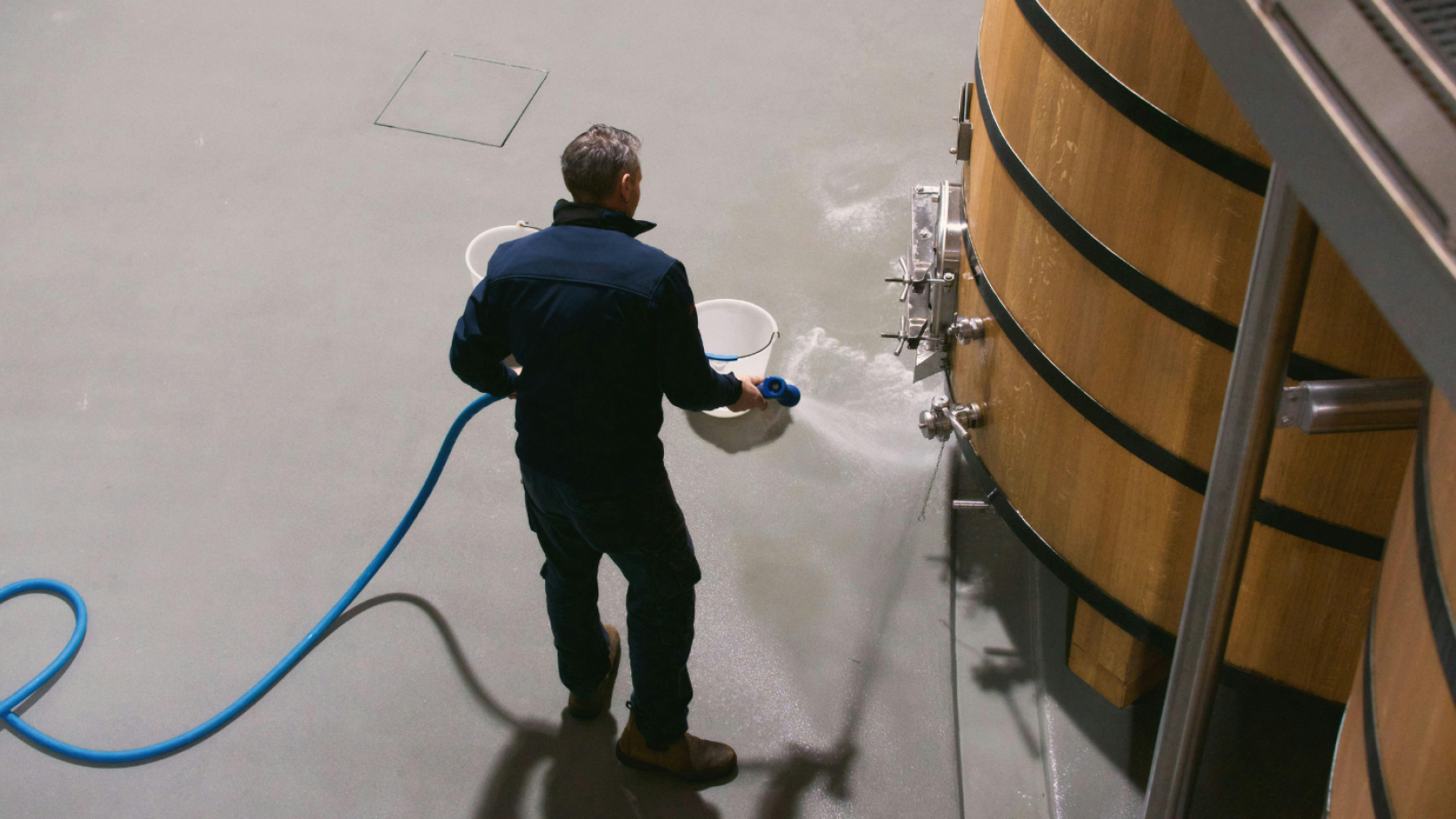
Cellar hygiene is the cornerstone of wine quality, food safety and process control. Proper sanitation prevents the spreading of spoilage organisms like wild yeasts, Brettanomyces and acetic acid bacteria. These spoilage organisms can cause unwanted aroma and taste defects, reduce overall wine quality and also ultimately lead to substantial financial losses. Cellar hygiene is a rigorous, multi-step practice that is integral to winemaking on any scale.
Maintaining a spotless wine cellar requires a comprehensive management plan, which includes structural design, equipment sanitation, environmental controls and routine microbial monitoring.
1. Structural design and environmental control
The foundation of cellar hygiene begins with the physical architecture. Surfaces that are difficult to clean serve as breeding grounds for bacteria and mould. Pay attention to the following factors:
- Floors: Floors must be smooth and impervious to liquids, and preferably slope downward toward drains. Concrete on its own is porous and can house micro-organisms and organic acids. Modern cellars often use seamless, non-porous polymer or epoxy resin floor coatings that resist acids and make cleaning highly effective.
- Walls and ceilings: Finishes must be washable and non-porous. While historical cellars can support beneficial cellar mould forms (which act as natural humidity regulators), modern commercial standards favour clean, washable surfaces to prevent mould growth on equipment.
- Temperature and humidity: Climate control is extremely important. The ideal storage temperature for maturation of wine is 13°C to 16°C, with minimal fluctuation. Relative humidity must be kept between 70% and 80%. If the air is too dry, corks can shrink and dry out, causing greater evaporation through the barrels, which exposes the wine to oxidation. Conversely, excessively high humidity can promote fungal growth and cause damage to wine labels and other structural elements.
- Lighting: Bottled wine is very sensitive to ultraviolet (UV) light, which degrades flavour compounds (a process known as light strike). Where bottled wine is stored, dull, low-heat LED lighting should be used instead of high-voltage light bulbs or direct sunlight. In the working areas of the cellar, it is preferable to use as much natural light or high-quality LED light as possible, to ensure that the cellar team can see and therefore clean properly everywhere. As the saying goes: out of sight, out of mind!
2. The two-step process: Cleaning and sanitation
Hygiene rests on two clear but equally important phases: cleaning and sanitation. One cannot effectively disinfect a surface that is not already clean.
- Step 1: Cleaning: Cleaning is the physical and chemical removal of organic residue (tartrates, protein, polysaccharides and yeast lees), as well as inorganic matter (limescale and oxides). It involves a pre-rinse with warm water, followed by the use of alkaline cleaning agents (for example, sodium hydroxide/caustic soda or potassium hydroxide) to break down fats and proteins. Enzymatic cleaning agents are also used to break down specific organic components.
- Step 2: Sanitation (disinfection): Sanitation involves the use of heat and/or chemical agents to deactivate or kill remaining microbes (which lowers their population by 99.9%). Common disinfectants include hot water, steam, peracetic acid, ozone and sulphur dioxide solutions.
3. Equipment sanitation protocols
Every surface that comes into contact with grape must or wine, like presses, tanks, pumps, bottling lines etc., needs meticulous, repeated sanitation. The following protocols apply to different cellar equipment and surfaces:
- Tanks and lines: Due to its non-porous nature, stainless steel is the industry standard. Cellars use cleaning-in-place (CIP) systems with automatic spraying devices, cleaning agents and disinfectants to circulate through closed tanks and fixed lines.
- Barrels (wood hygiene): Wood barrels are especially susceptible to Brettanomyces and volatile acidity (VA). Barrels must be thoroughly rinsed out and cleaned before sanitation. Sanitation is achieved by steaming the barrel for approximately 10 minutes, using ozone-treated water, or burning sulphur wicks. NB: Also keep in mind any other wood items in the cellar, like pallets or beams on which barrels are stored. Any of these items can serve as a source of spoilage micro-organisms.
- Bottling lines: Bottling lines must be carefully sterilised before every use to prevent the introduction of spoilage organisms during the final stage of production.
4. Chemicals and equipment in the cellar
Choosing the correct cleaning agents is critically important. Hard chemicals or products that give off strong odours can have a lasting detrimental effect on the flavour of wine. Consider the following guidelines:
- Peracetic acid: A highly effective non-rinse disinfectant regularly used in winemaking. It rapidly reduces Brettanomyces contamination, but must be handled according to safety guidelines.
- Ozone: Ozone serves as a powerful, broad-spectrum oxidant. As it is applied as a gas or dissolved in water, it destroys bacteria and mould on contact without leaving a chemical residue behind.
- Steam cleaning: Hot water and pressurised steam are important physical methods. In keeping with natural winemaking practices, they reduce microbial populations and remove biofilms by only using temperature and mechanical action.
- Chlorine warning: Although chlorine is a common household cleaning agent, the use thereof in cellars should be strictly avoided. Chlorine reacts with wood and cork to form TCA (2,4,6-trichloroanisole) – a chemical responsible for the dreaded cork taint defect in wines.
5. Microbial monitoring and preventative maintenance
Maintaining a sanitary cellar requires a proactive microbial monitoring programme rather than reactive corrections. The following aspects must form part of this:
- Environmental plating: Cellars use regular microbial plating or swabbing of floors, drains and equipment surfaces to monitor and control baseline microbiological populations before they interact with wine.
- Wine samples: Winemakers consistently take samples throughout fermentation and maturation to check for signs of spoilage, like faulty flavours and high volatile acidity. Proper aseptic technique is required when taking samples to prevent contamination and ensure accurate process control.
- Post-harvest maintenance: After the busy harvest season, cellars need a deep, preventative maintenance programme. Equipment should be dismantled, properly cleaned, treated/lubricated and inspected to prevent mechanical breakages during the next harvest.
Conclusion
Cellar hygiene fundamentally revolves around the control of microbes. As wine is a perishable product that is naturally susceptible to oxidation and microbial spoilage, the establishment of an impeccable physical environment is non-negotiable for the production of high-quality wine. By investing in proper structural design, executing precise cleaning and sanitation protocols, as well as proactive monitoring of microbial activity, winemakers can protect the flavour profile of their wine from the load bin to the bottle.
For more information, contact Pieter Badenhorst at [email protected].
Click here to get your copy of WineLand Magazine.

More from
Vineyard, cellar and production
How to understand regenerative farming
Regenerative farming is becoming part of the language of modern viticulture, but what does it actually look like in a vineyard?
JC Smith praat oor wynmaak in die Oos-Vrystaat
JC Smith is ’n derdegeslag-wynmaker. Sy oupa Dassie en pa Flip was albei wynmakers, en hy het tussen wingerde en wynkelders grootgeword. Hy is tans die wynmaker by Blydschap in die Oos-Vrystaat.
Making wine in Cape Town's Philadelphia ward
Havana Hills overlooks Table Mountain and the Atlantic Seaboard from its perch atop one of the region’s smallest wards, Philadelphia. Piet Kleinhans recently took over the reins as winemaker.