
Think smart and save money
To be honest, cellar work is not always easy and can be draining and tiresome. This can sometimes lead to staff working on ‘autopilot’, but when the team stays consistently focused and pays attention to the small details, it can result in big savings or prevent major financial setbacks.
· 6 min read

Here are six simple and practical examples of how this looks on the cellar floor:
1. Identify equipment faults early
If a pump or cooling equipment breaks down during harvest, it causes big trouble. It could mean incurring emergency repair costs or possibly losing a whole tank of grapes if the temperature rises too high.
- Check the filters: If the workers clean the filters regularly, the cooling system does not have to work unnecessarily hard. This also keeps the electricity bill low.
- Test the sensors: By testing the tank temperature sensors once monthly in a bucket of ice, their accuracy can be monitored. If a sensor indicates a temperature that is too high, the unit cools the tank excessively and this wastes electricity and can even cause the wine to freeze.
- Look out for leaks: If someone notices a small drop on the seal of a pump and immediately replaces the leaking seal, they save the motor. If the leaking persists, it can damage the inner parts of the pump, potentially turning a quick repair job into buying an expensive new pump.
2. Take care of the barrels
Barrels are very expensive. If they are not properly maintained, money is wasted.
- Keep humidity at the correct levels: If the cellar becomes too dry, the wine literally evaporates through the barrel staves. By keeping the humidity at approximately 70%, you prevent good wine from going to waste by continuously just topping up the empty space at the top of the barrel.
- Good cleaning habits: By taking the time to properly clean barrels using steam or a high-pressure washer, harmful bacteria (like Brettanomyces) that can cause spoilage of the wood, are destroyed. One contaminated barrel can easily ruin a whole blend.
3. Prevent wastage and leaks
Wine belongs in the tank, not in the drain. Simple human error is the most common cause of product losses.
- Dispose of worn rubber seals: A worn, flattened tri-clamp seal will inevitably leak. Although it might seem negligible, a slow drip over a weekend can lead to significant wine losses. The drip can also become worse than initially observed and thus exacerbate the impact. Where wine drips, it naturally also creates poor hygiene conditions.
- Keep an eye on the tank: Never rely on an automatic shut-off sensor alone. Someone has to keep a close eye on the sight glass during the last 10% of a wine transfer to ensure that the tank does not overflow. It also follows that the sight glass must be kept in good condition to avoid mistakes.
- Follow the pipes: Before anyone switches a pump on, they must perform a physical check of the pipeline to make sure it is connected to the right valve. Accidentally pumping white wine into a red wine tank or vice versa, is a nightmare scenario.
4. Avoid wasting water and chemicals
Wine cellars use vast amounts of water and cleaning agents. Following strict protocols in this regard can result in substantial savings.
- Measure, don’t guess: Don’t allow staff to add chemicals to a tank until the water ‘looks right’. Rather use a measuring jug. Using an excessive amount of chemicals does not clean better, it only requires twice as much water to rinse out of a tank.
- Use the right nozzles: The use of high-pressure nozzles on cleaning equipment helps to reduce the time required to clean tanks. This leads to a saving in working hours, electricity usage and, indirectly, to a reduction in the treatment of wastewater.
- Re-use of rinsing water: The clean water of the final rinsing cycle of a clean tank can be collected and re-used to remove thick sediment from the floor or for the first dirty rinsing process of the next tank.
5. Keep accurate stock records
If a product runs out at the wrong time, everything comes to a standstill.
- Weighing of additives: Additives must be weighed with precision on digital scales. If a guess or estimate is made simply at a visual glance, the colour, flavour and aroma can be stripped from a wine, which can be very costly to correct later.
- Fill empty spaces with gas: If the staff forget to do this, oxygen penetrates, with the potential to turn your premium wine into salad dressing.
- Count dry materials: Do a weekly physical count of cork closures, capsules and labels. It is a very expensive mistake to discover on the morning the mobile bottling truck arrives that you do not have enough labels.
6. The battle against oxygen
Oxygen is the enemy of finished, market-ready wine. Once the wine has completed fermentation, the highest priority is to keep the dissolved oxygen levels as low as possible. It is much better to prevent oxygen uptake than treat it afterwards.
- Rinsing of pipes: Force all oxygen out of the transfer pipes with gas before the wine is moved. If this step is skipped, the wine will be damaged and the fresh fruit aromas will be lost.
- Fastening of loose fittings: If the fitting on the suction side of a pump is loose, it will draw air into the wine stream without wine leaking out. This is a silent killer that causes oxidation of the product.
- Use of a DO meter: Train staff to use a dissolved oxygen (DO) meter correctly. If you notice a sudden increase in oxygen levels during a transfer, the problem can be corrected in a timely manner before the wine’s shelf life is drastically cut short and quality is negatively influenced.
Summary
These simple examples above are just a few of the little foxes that spoil the vineyard. There is a multitude of other ways that we can save money and help to keep our cellars profitable, simply by focusing on basic principles. There is also a saying that goes: “If you have time to do a task twice, you have time to do it right the first time!” It is a powerful reminder that haste often leads to mistakes, which ultimately end up demanding more time, energy and money to rectify.
Take the necessary time and make sure the first time that the right procedures are followed. Those tasks that gradually come to be considered as routine, are exactly the ones that sometimes have to be approached with a bit more focus and attention.
For more information, contact Pieter Badenhorst at [email protected].

More from
Vineyard, cellar and production
Biological control in winegrape production
South African wine producers are increasingly using biological agents as part of Integrated Pest Management (IPM) programmes to control pests and diseases while meeting growing environmental sustainability requirements across all farming systems.

Bioprotection, from harvest to fermentation
In modern winemaking, bioprotection has emerged as an innovative and sustainable strategy to improve microbial control while reducing dependence on sulphur dioxide.
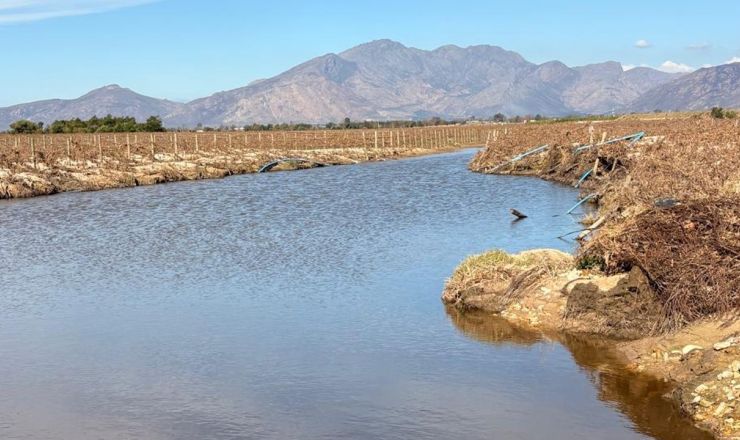
Flood damage - what next?
In light of the unprecedented floods during the second week of May 2026, this article offers a few guidelines on how flood risks can be approached and assessed.