
Drought tolerance of different scion cultivars (Part 2): Soil water status
The objective of the study was to assess the vegetative growth, yield and wine quality response of selected alternative and reference wine grape scion cultivars to dryland conditions in the Swartland region of South Africa.
Carolyn Howell, Karen Freitag and Reckson Mulidzi
· 16 min read
Abstract
Drought-tolerant scion cultivars can reduce the risk of yield losses for viticulture. However, there is no scientifically based information regarding the growth, yield and quality of alternative scion cultivars in South Africa. Consequently, the study was conducted to generate this knowledge to make recommendations to the wine industry. Nine red and eight white cultivars were planted in an experimental vineyard near Malmesbury in July 2018. The soil water status was measured every two weeks from July 2018 to March 2024. Results showed that the plastic film installed on grapevine rows at planting reduced evaporation from grapevine rows substantially compared to work rows in the establishment phase of the vineyard. However, the plastic film also reduced rainwater infiltration on the grapevine rows, so its soil water content (SWC) was consistently lower compared to the work rows at bud break. Due to the water-saving effect thereof, plastic films on grapevine rows are essential for the establishment of dryland vineyards. Given the reduction of SWC on grapevine rows in summer after the establishment phase, it will be of critical importance to prepare the soil properly before planting so that the grapevine’s roots can proliferate the entire soil volume if this practice is to be used.
Over the first three years, water consumption of grapevines increased as their canopies became larger. In the fourth and fifth years, water absorbed by the full-bearing grapevines was comparable to that of the three-year-old grapevines. There were substantial seasonal differences in the soil water status at bud break, depending on the amount of winter rainfall.
Grapevine water status will be presented in the next article.
Introduction
Drought-tolerant scion cultivars can reduce the risk of yield losses for viticulture. However, there is no scientifically based information regarding the growth, yield and quality for alternative scion cultivars in South Africa. Consequently, the study was conducted to generate this knowledge to make recommendations to the wine industry. Nine red and eight white cultivars were planted in an experimental vineyard near Malmesbury in July 2018.1
The objective of the study was to assess the vegetative growth, yield and wine quality response of selected alternative and reference wine grape scion cultivars to dryland conditions in the Swartland region of South Africa. The study will generate the knowledge to make recommendations on the selection of alternative scion cultivars based on scientifically verified results. It must be noted that the study aimed to assess grapevine responses in an almost worst-case scenario, i.e. grapevines growing under dryland conditions in a sandy loam soil in the Swartland region. This would enable extrapolation of the findings to other soil-climate scenarios. In this specific article the soil water status will be presented.
Materials and methods
The soil water status in the experimental vineyard located on the westerly side of Malmesbury, where nine red and eight white cultivars were planted in July 2018, was measured by means of the neutron scattering technique.2 For this purpose, access tubes were installed on the grapevine rows in each of the 51 plots. Measurements were taken at 30 cm increments to a depth of 1.5 m from July 2018 to March 2024. However, the soil water status was only measured in 12 representative plots at 14-day intervals throughout the year to follow the annual soil water dynamics. The neutron probe was calibrated against gravimetric soil water content (SWC) on the grapevine row when the soil began to dry after the winter of 2019. On days when the grapevine water status was measured, the SWC was measured in each of the 51 plots.
To quantify the role of the plastic film, the SWC was measured gravimetrically to a depth of 1.5 m in the middle of the work row three times during the 2019/20 and 2020/21 seasons. Measurements were carried out at six positions in the experimental vineyard. From October 2021, the SWC in the work row was also measured at 14-day intervals throughout the year by means of the neutron scattering technique in six representative plots.
Evapotranspiration (ET) on the grapevine row over 14-day periods was calculated using the universal soil water balance equation as follows:
ET = SWCi + I + P - D - R - SWCe (Equation 1) where SWCi and SWCe are the soil water content in the 1.5 m profile at the beginning and end of a 14-day period, I is irrigation (not applicable), P is rainfall, D is drainage below 1.5 m and R is runoff from the surface. Since rainfall appeared to be almost equal to runoff on the grapevine row, P and R were excluded from Equation 1. Given the low rainfall and the relatively constant soil water content in the 120 - 150 cm layer, it is unlikely that significant drainage losses occurred below 1.5 m depth. Consequently, drainage was also excluded from Equation 1. Based on the foregoing, Equation 1 was reduced to the following: ET = SWCi - SWCe (Equation 2).
Results and discussion
Soil water dynamics in grapevine and work rows
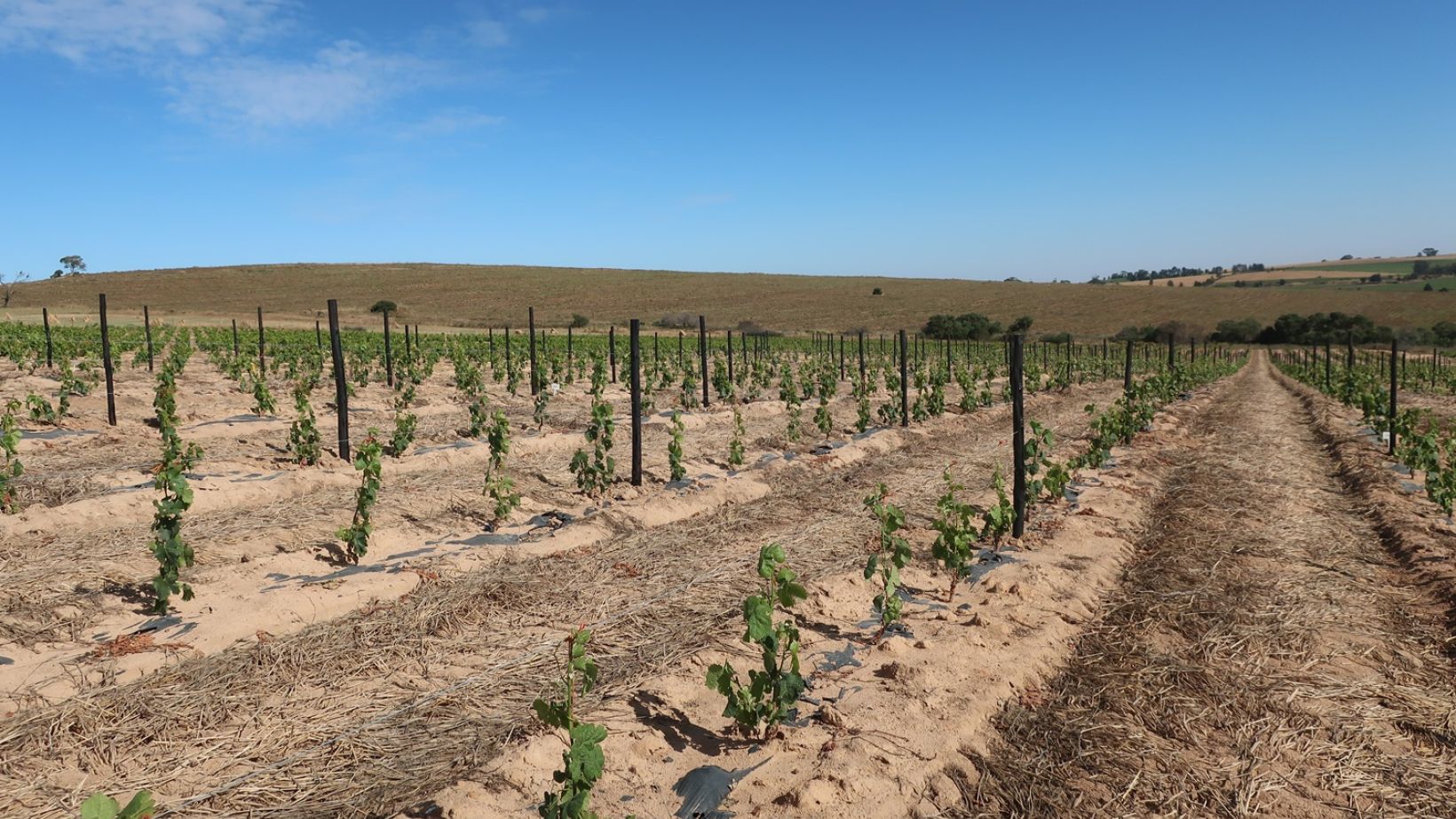
Before discussing the soil water dynamics, the role of the plastic film on the grapevine rows (Figure 1) needs some consideration. Measurements of SWC in the 2019/20 season on grapevine and work rows showed that the plastic film reduced evaporation from the grapevine row soil substantially compared to the work rows (Figure 2). In fact, over the two-month period, soil water loss under the plastic film on the grapevine row was only 20 mm compared to 73 mm in the work row. The latter water loss was probably due to evaporation, as well as water being absorbed by grapevine roots extending into the work row.
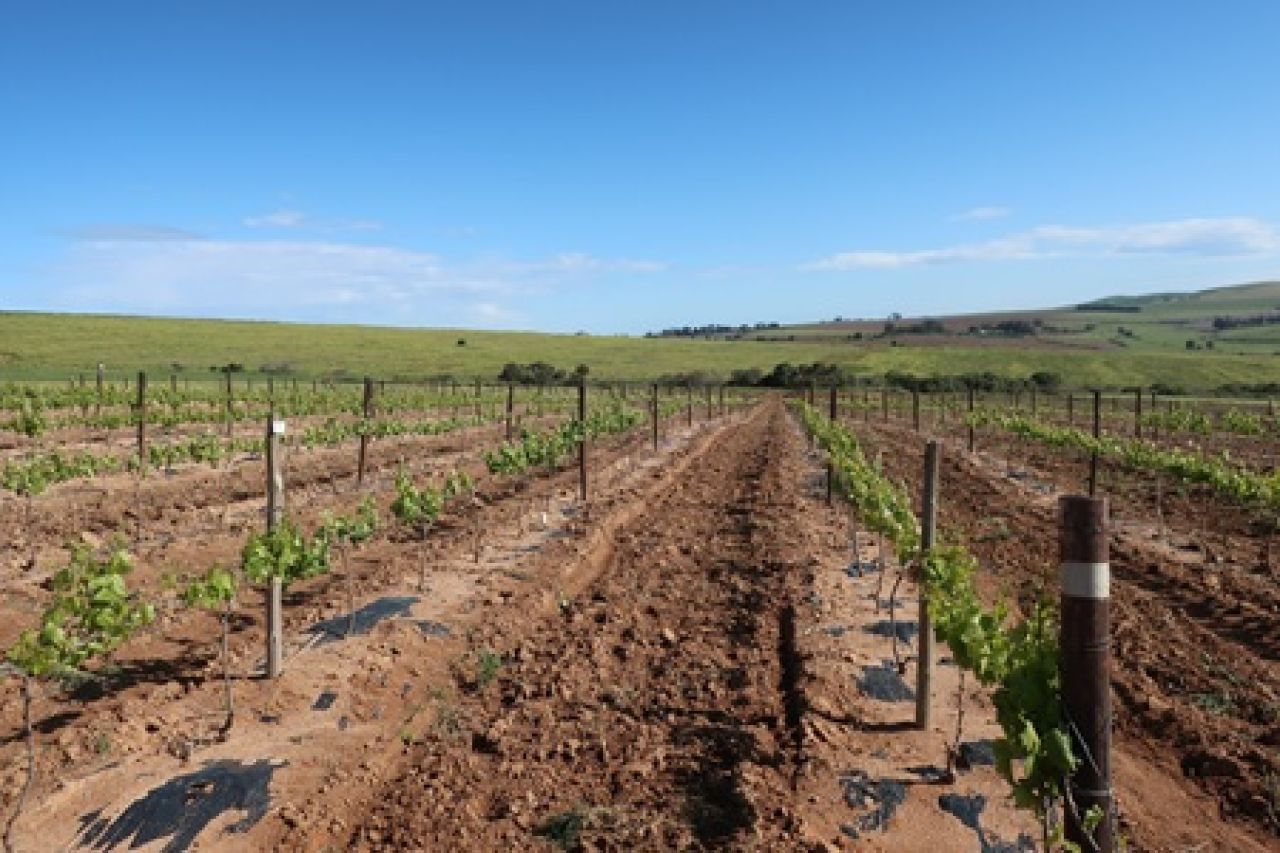
FIGURE 1. The two-year-old grapevines as on 2 October 2020. Note that the plastic film is still intact on the grapevine rows.
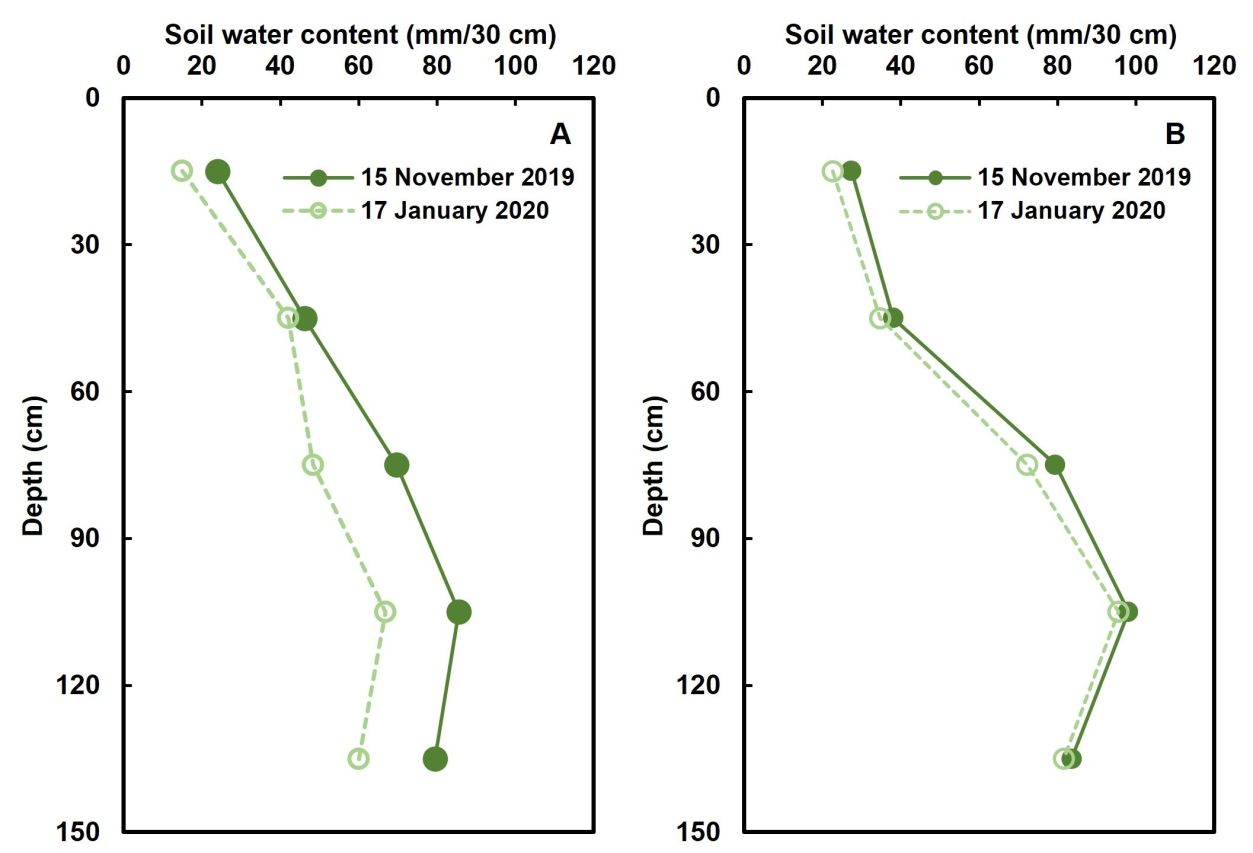
FIGURE 2. Comparison between soil water content (SWC) on the (A) work row and (B) grapevine row on two dates during the 2019/20 season.
Another important aspect regarding the role of the plastic film is its effect on rainwater infiltration on the grapevine rows. Perusal of the soil water data revealed rainfall had almost no effect on the total SWC in the grapevine row between 22 and 29 October 2019. Even when 28 mm rainfall occurred on 26 October 2019, the SWC on the grapevine row only increased by merely 3.6 mm. This indicated that the plastic film prevented rainfall infiltration on the grapevine row, and that almost no preferential flow occurred alongside the neutron probe access tubes. The plastic film probably caused lateral distribution of the rainwater into the work row as illustrated in Figure 3. Furthermore, the SWC increased only by 0.4 mm in the 0-60 cm layer, compared to 3.2 mm in the 60 - 90 cm layer. This suggested that some water flowed laterally from the work rows into the deeper layers on the grapevine rows. Since there was such a small soil water content increase in the 0 - 60 cm layer on the grapevine row, it seemed as if the plastic film “shaded” the shallower part of the root zone.
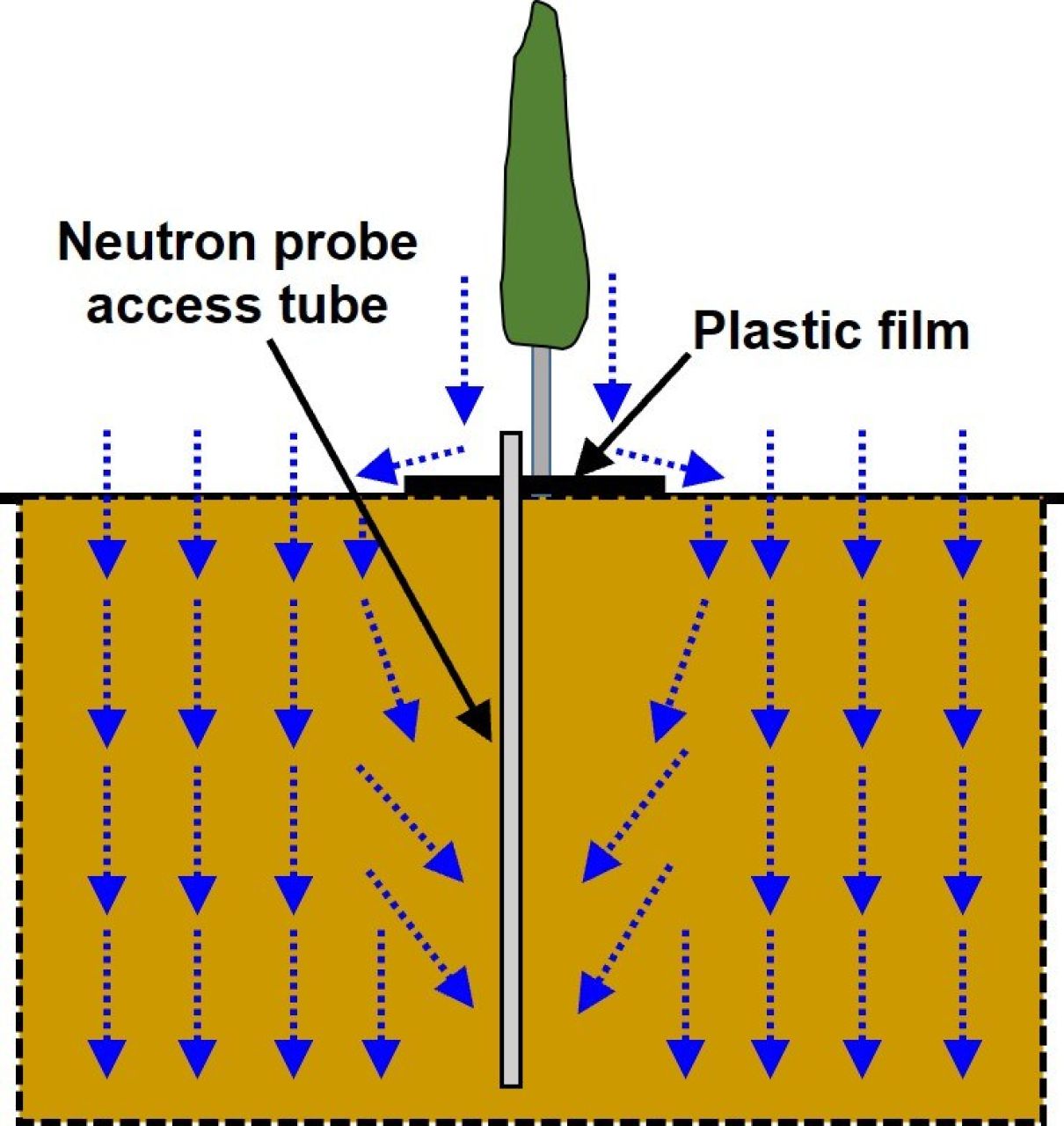
FIGURE 3. Schematic illustration of rainwater infiltration and distribution where a plastic film is installed on the grapevine row.
Based on the foregoing, there is a possibility that the soil profile on the grapevine rows did not always reach field capacity in winter. On the one hand, low SWC on the grapevine rows could be due to lower rainfall, but it could also be that the plastic film most likely prevented rainwater infiltration as discussed above. At bud break, the SWC on grapevine rows was consistently lower compared to the work rows. An example of the SWC on the grapevine- and work rows in the 2022/23 season is given in Figure 4, and indicates that the SWC on the grapevine row under the plastic film never reached field capacity, or became saturated, during winter. Given the lower-than-average rainfall in the winter of 2022,1 the latter trend was not entirely unexpected. Furthermore, it must be noted that the SWC on the work rows increased after 55 mm rainfall was recorded in March 2023, but the SWC on the grapevine row failed to respond (Figure 4). This confirmed that the plastic film on the grapevine rows restricted water infiltration into the soil. The SWC on the grapevine- and work rows responded readily to the substantial amounts of rain that fell in June 2023.
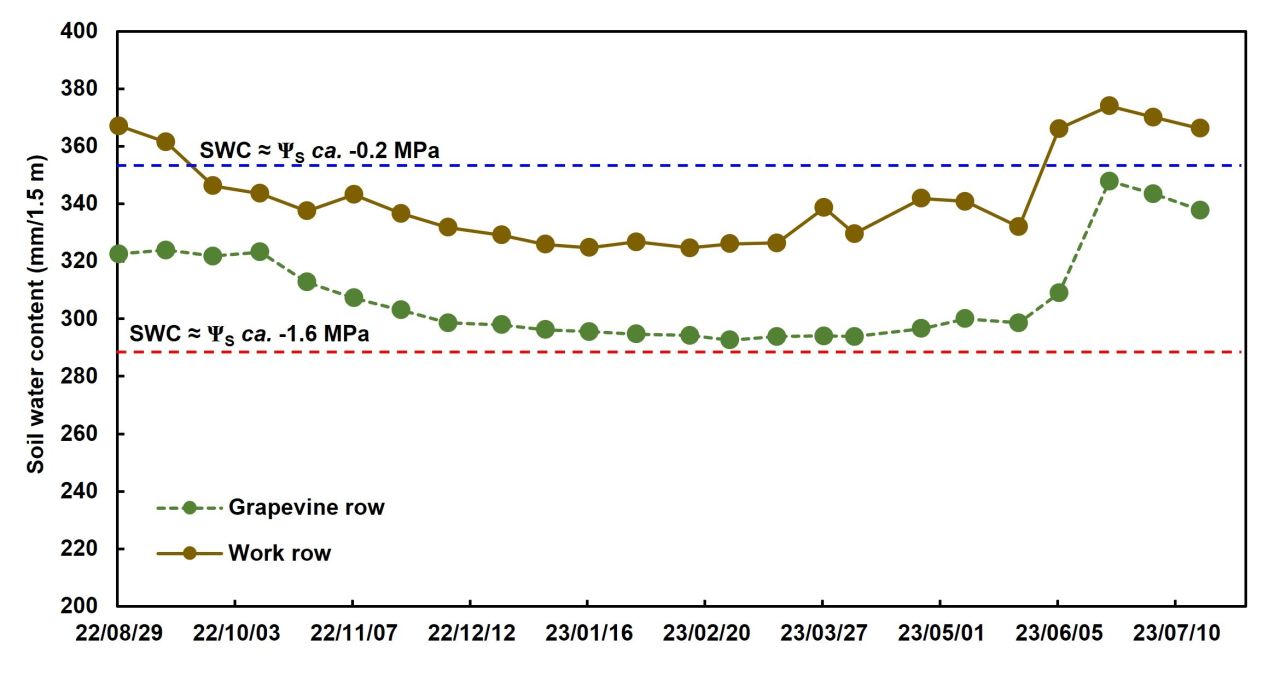
FIGURE 4. Variation in soil water content (SWC) on the grapevine- and work rows as determined during the 2022/23 season.
In the establishment phase of the grapevines, as the rainfall decreased and the growing season progressed in the summer, the SWC on the grapevine rows was consistently higher than in the work row (Figure 5). As the grapevines grew and the ET increased, the SWC on the grapevine rows was lower than in the work row when measured in summer. This difference highlights the importance of the plastic film in conserving soil water for later in the growing season during vineyard establishment. Thus, a plastic film creating a plastic mulch is critically important during the establishment phase, especially in the case of dryland vineyards.
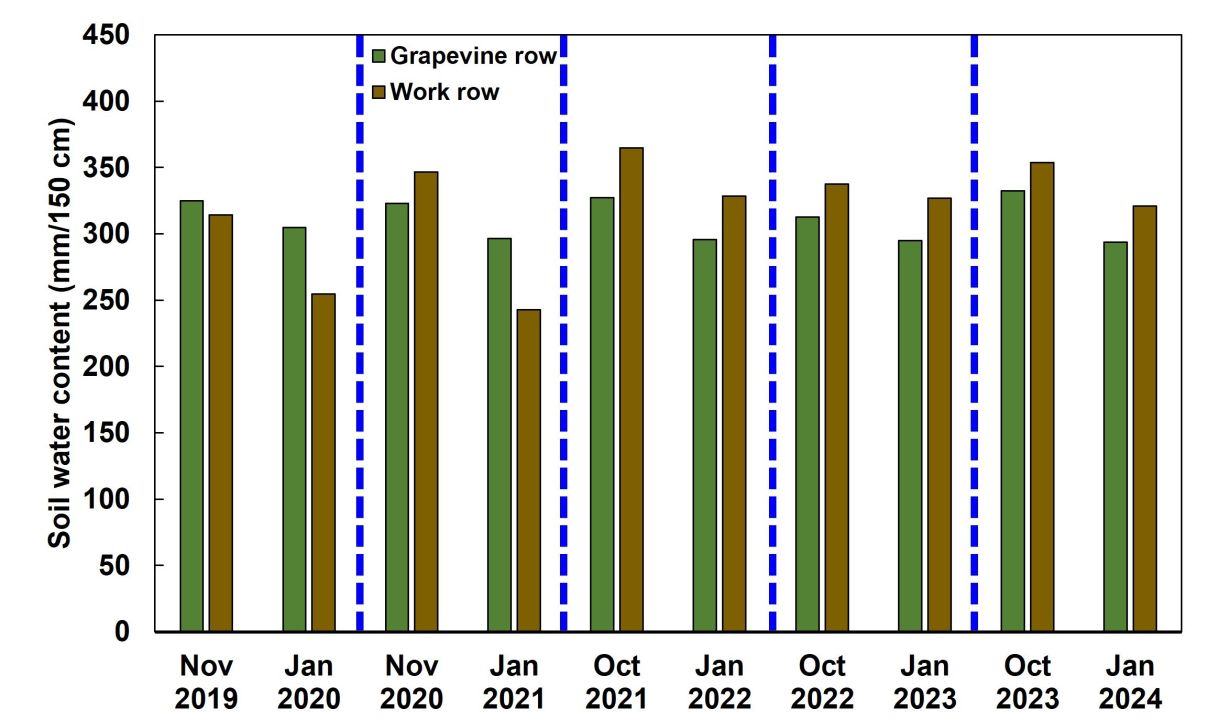
FIGURE 5. Variation in soil water content (SWC) in the grapevine rows and work rows as determined from the 2019/20 to 2023/24 seasons. Vertical dashed lines are for visual comparison between seasons.
When comparing the SWC profiles at three stages during the growing season after the wet winter of 2023, it is clear that the higher SWC on the work row occurred primarily in the 30 - 90 cm layer early in the season (Figure 6A). In mid-season, the SWC also only appeared to be higher in the 30 - 60 cm and 60 - 90 cm layers (Figure 6B). The SWC profiles indicate that water loss on the work row was slightly lower compared to the grapevine row from 23 October 2023 until 15 January 2024. This was likely due to a probable higher root concentration on the grapevine row, which would have absorbed more water. It was previously reported that in a non-irrigated scenario, the roots growing in the grapevine row were 202 per m2 compared to 130 per m2 for the wheel tracks and 110 per m2 for the work row.3 It should be noted that quantifying the grapevine root distribution was beyond the scope of the current study. The dry topsoil in the work row probably also acted as a “mulch” that reduced water loss via evaporation. It is interesting that no significant changes in SWC occurred from 15 January 2024 until the end of the growing season (Figure 6C). This suggested that the vineyard water consumption was low in the later part of the season.
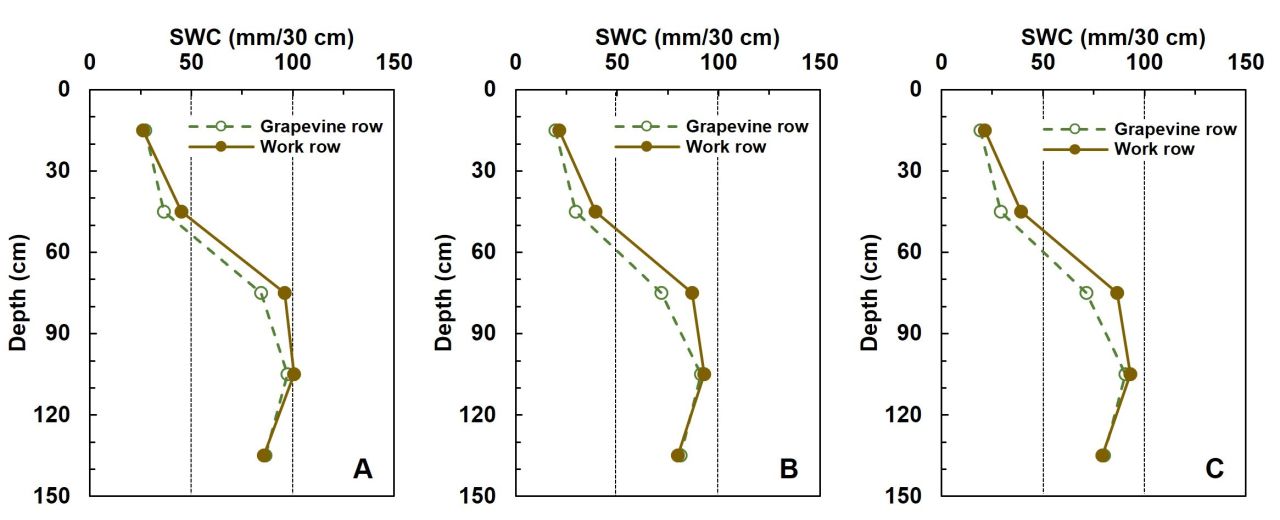
FIGURE 6. Comparison of the soil water content (SWC) profiles on the grapevine rows and in the work rows determined (A) on 23 October 2023, (B) 15 January 2024, and (C) 15 March 2024, respectively. Vertical dashed lines are for visual comparison between graphs.
Visual observations of the plastic film on the grapevine rows (Figure 7) across eight experimental plots were conducted to assess its condition at the end of the study. The plastic film was mostly intact (Figure 8A), but in two of the plots the plastic had deteriorated to a certain extent (Figure 8B). Given that the black plastic film reduced the SWC on grapevine rows, if this practice is to be used, it will be of critical important to prepare the soil properly so that the grapevine’s roots can proliferate the entire soil volume.
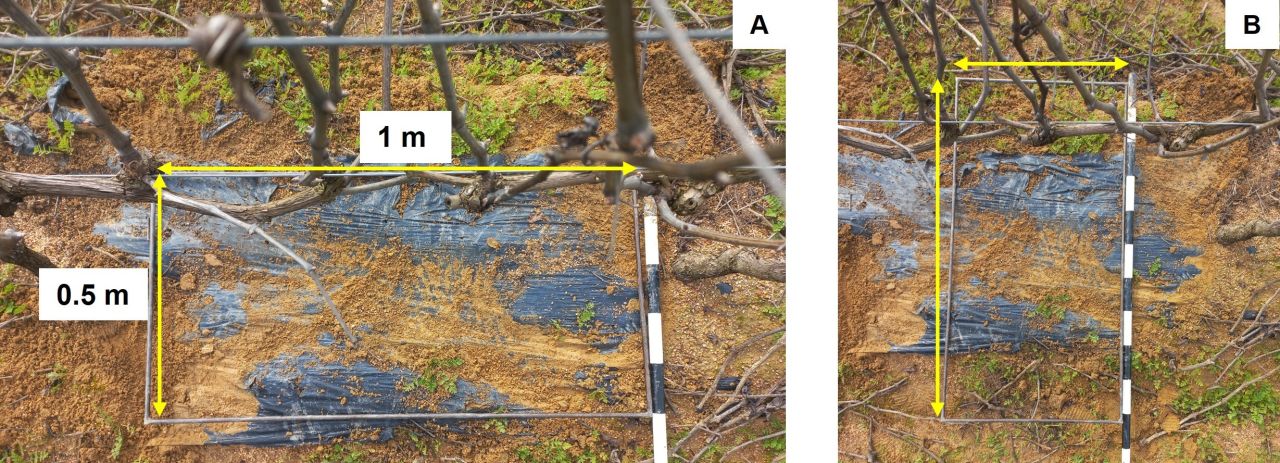
FIGURE 7. The plastic was visually observed (A) on the grapevine row and (B) across the grapevine row.
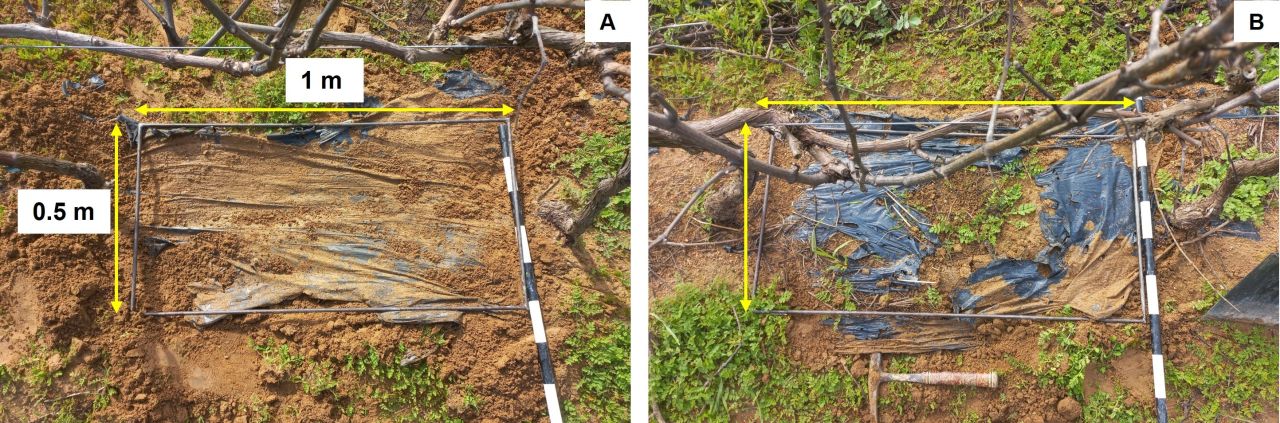
FIGURE 8. The plastic on the grapevine rows was mostly (A) intact, but there was some (B) degree of deterioration of the plastic observed.
Grapevine water status versus soil water content
The SWC was related to the grapevine midday stem water potential (ΨS) of -0.2 (wet) and -1.6 MPa (dry), respectively (Figure 9); such an approach integrates the soil and plant responses.4,5 Midday ΨS, measured at various stages, was well related to the SWC in the 0 - 150 cm layer (Figure 9). The SWC where ΨS would reach -0.2 and -1.6 MPa, respectively, is ca. 342 and 288 mm per 150 cm.
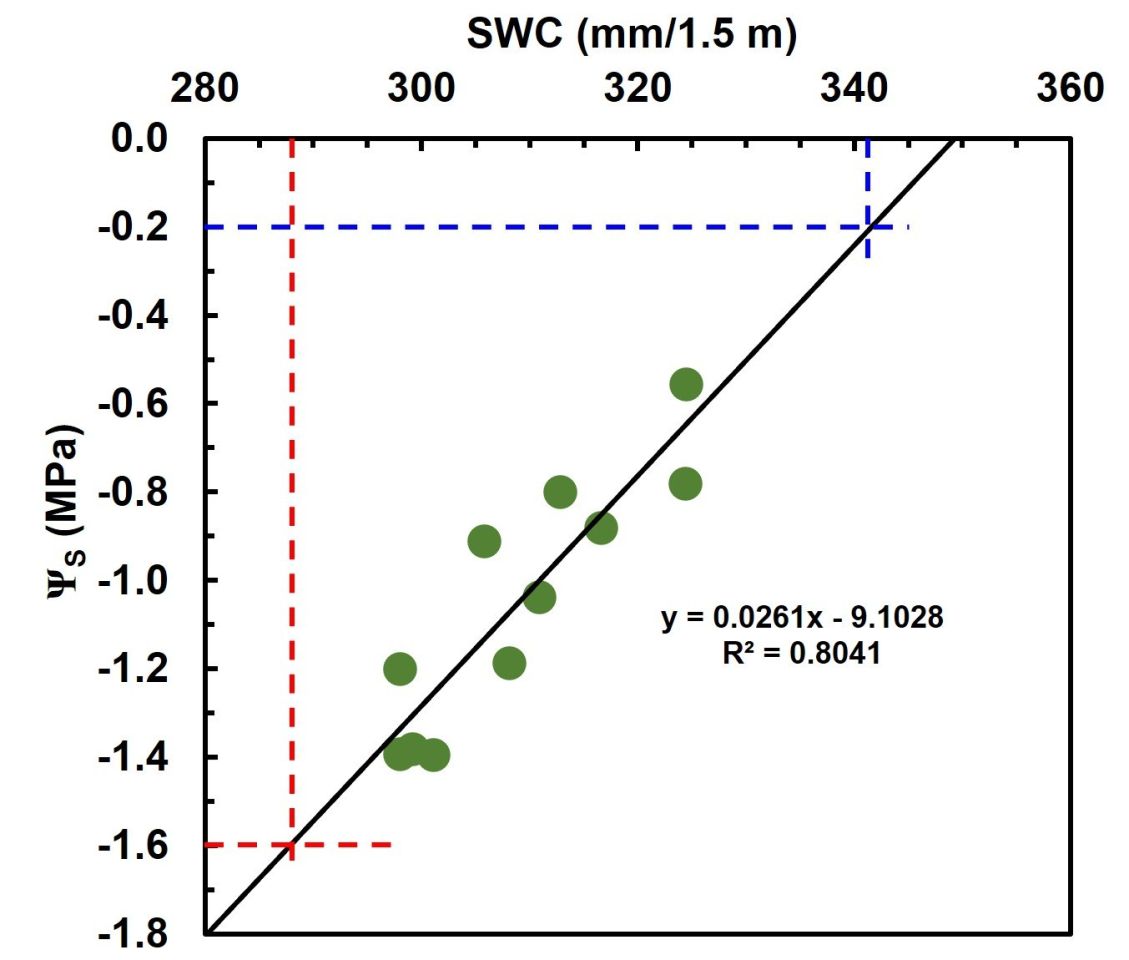
FIGURE 9. Relationship between midday stem water potential (ΨS) and soil water content (SWC) on the grapevine rows determined during the course of the study. Data are the means for all cultivars.
Variation in seasonal soil water content
The progression of the SWC over the six seasons is given in Figure 10. Over the first three years, the SWC depletion during the growing season became increasingly closer to the level of -1.6 MPa as the young grapevines developed. The SWC was near field capacity at bud break in each of the years. If this does not happen, the ΨS might fall below -1.6 MPa earlier in the growing season due to dry soil conditions. Such severe water constraints at an early stage will most likely have negative effects on grapevine growth, yield and wine characteristics. In the fourth and fifth years, water absorbed by the full-bearing grapevines was comparable to that of the three-year-old grapevines in the 2020/21 season, i.e. the SWC was also depleted close to the level where midday ΨS would exceed -1.6 MPa (Figure 10). It should be noted that in 2022/23, the SWC on the grapevine row was the lowest of all the seasons from bud break until February. This was caused by the relatively low rainfall during the winter of 2022. Due to the substantial amounts of rainfall in winter 2023, the SWC in the winter of 2023 became wetter earlier than in previous years.
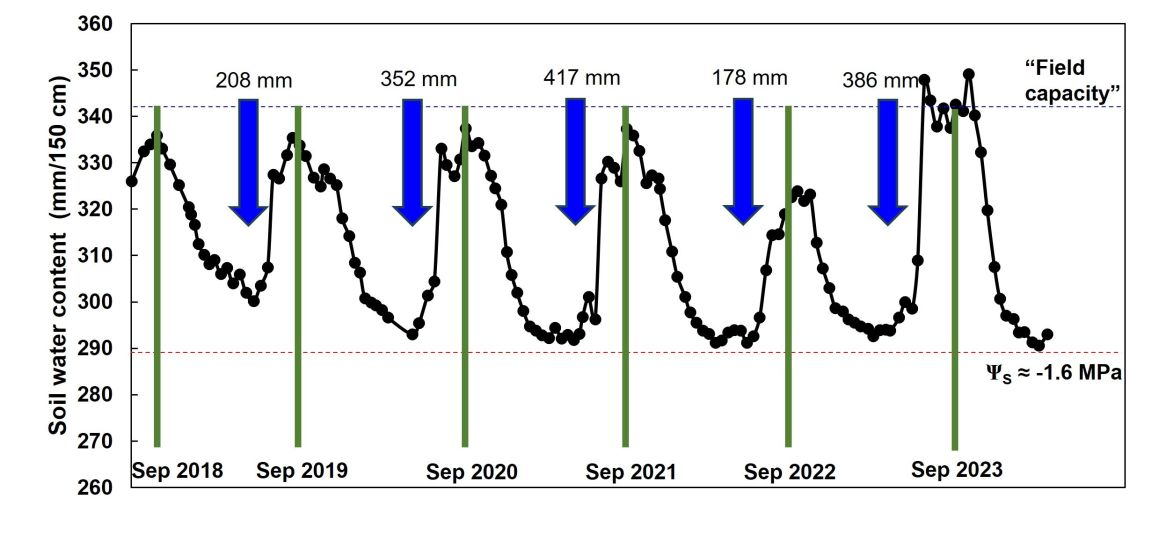
FIGURE 10. Variation in soil water content (SWC) on the grapevine rows as determined for the duration of the project. Horizontal lines respectively indicate field capacity and the SWC that corresponds to a midday stem water potential (ΨS) of -1.6 MPa. The vertical lines indicate the beginning of September for every year.
Evapotranspiration
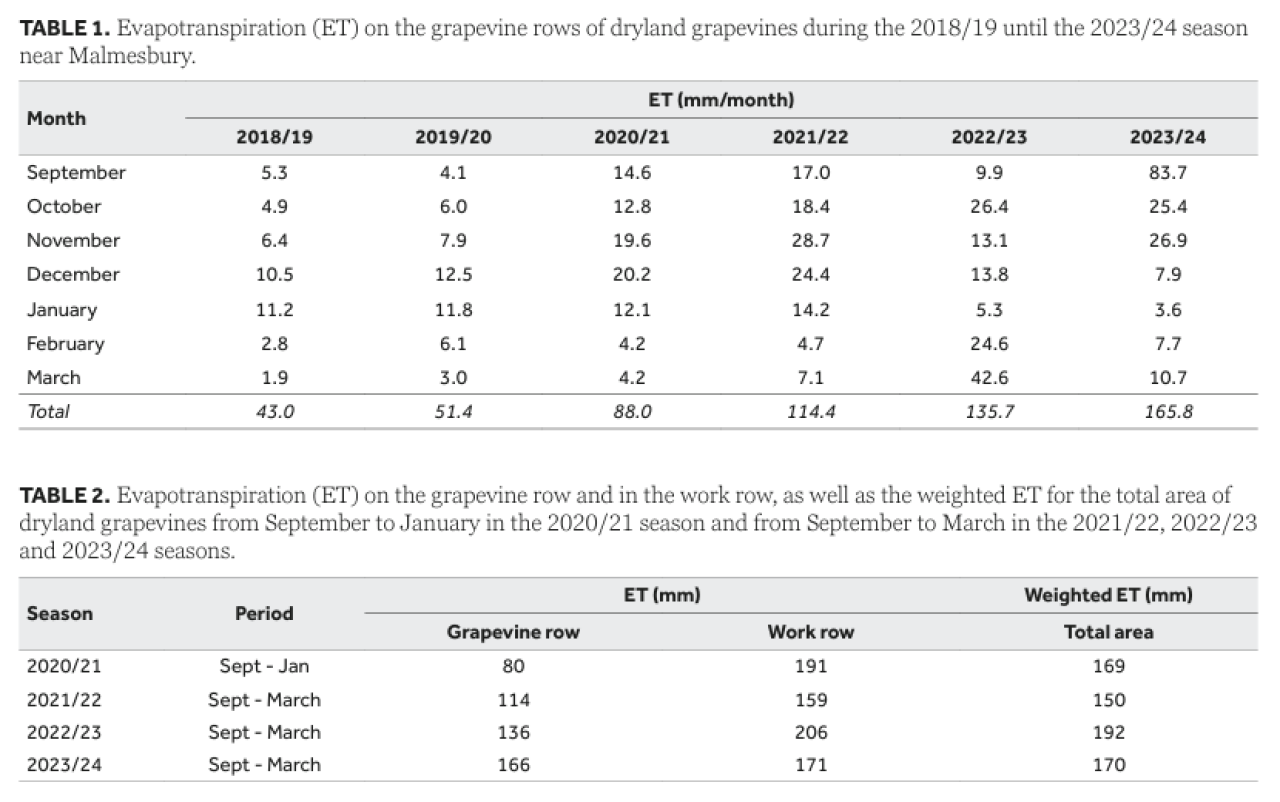
Due to increased leaf area as the canopies developed, the ET measured and calculated for the grapevine rows increased substantially from the 2018/19 to the 2023/24 seasons (Table 1). This indicated that transpiration might be a major component of the ET measured on the grapevine row. In the 2019/20 season, ET determined on the grapevine row was relatively low in September 2019 (Table 1) because of the cool atmospheric conditions and limited leaf area. The ET steadily increased from September 2019 until December 2019 as atmospheric conditions became warmer and drier, and the grapevine canopies developed. This was followed by a continuous decline until March 2020. The exceptionally low seasonal ET of 51.4 mm of this particular season might be misleading since the grapevines most likely also absorbed water from the work rows. The foregoing showed that ET of vineyards with plastic films on the grapevine rows is complex. The ET was low during the second part of the 2020/21 and 2021/22 seasons to such an extent that it was fractions of mm per day. The ET was substantially higher in the second part of the season in 2022/23. This was due to untimely rainfall in February and March.1
Due to limited rainfall penetration on grapevine rows, the ET based on the total vineyard area might be a better indication of the vineyard water use. Using the SWC measured in the work row plus rainfall, a soil water balance from 25 August 2020 until 13 January 2021 was calculated. Over this period, ET in the work row and on the grapevine rows amounted to 191 mm and 80 mm, respectively. It must be noted that the work row ET was more than double the grapevine row ET. A weighted ET was then calculated (Table 2). It was assumed that the plastic film covered ca. 20% of the soil surface. The weighted ET for the total surface amounted to 169 mm. The latter agreed well with the 177 mm ET over the same period as estimated by means of remote sensing, i.e. Fruitlook. In the 2018/19 and 2019/20 seasons, the Fruitlook estimated ET amounted to 88 mm and 116 mm, respectively. This gives an indication of the total water use increase as the young grapevines developed. The weighted ET was 150 mm, 192 mm and 170 mm for the 2021/22, 2022/23 and 2023/24 seasons, respectively (Table 2).
Conclusions
Results showed that the plastic film installed on grapevine rows at planting reduced evaporation from grapevine rows substantially compared to work rows in the establishment phase of the vineyard. However, the plastic film also reduced rainwater infiltration on the grapevine rows so the SWC under the plastic film on grapevine rows was consistently lower compared to the work rows at budbreak. Due to the water saving effect thereof, plastic films on grapevine rows are essential for the establishment of dryland vineyards. Given the reduction of SWC on grapevine rows in summer after the establishment phase, it will be of critical importance to prepare the soil properly before planting so that the grapevine’s roots can proliferate the entire soil volume if this practice is to be used.
Over the first three years, the water consumption of grapevines increased as their canopies became larger. In the fourth and fifth year, water absorbed by the full bearing grapevines was comparable to that of the three-year-old grapevines. There were substantial seasonal differences in the soil water status at bud break, depending on the amount of winter rainfall.
Grapevine water status will be presented in the next article.
Acknowledgements
- South Africa Wine and the Agricultural Research Council (ARC) for funding Project P04000207 entitled “Assessing the drought tolerance of selected grapevine scion cultivars under dryland conditions in the Swartland region”.
- ARC for infrastructure and resources.
- Staff of the Soil and Water Science division at ARC Infruitec-Nietvoorbij for technical support, in particular J. Adams, F. Baron and T. Harris for their dedicated, enthusiastic work and support.
- Rossouw of Fairview Farm, Malmesbury, for allowing us to have the project on his farm and for his interest in the study and viticultural inputs. His staff for their inputs in the experimental vineyard.
- van Breda, C. Paulsen and other colleagues in the PHAT division at ARC Infruitec-Nietvoorbij for the analyses of the juice samples and the making of the experimental wines for the project.
- van der Rijst of ARC for statistical analyses of the data.
- South Africa Wine for funding for C.L. Howell to attend the 19th AWITC in Adelaide, Australia in July 2025.
References
- Howell, C., Freitag, K & Mulidzi, R., 2025. Drought tolerance of different scion cultivars (Part 1): Introduction. Wineland.
- Moffat, E.G., 2017. Mulching and tillage with compost to improve poor performing grapevines. Thesis, Stellenbosch University, Private Bag X1, 7602 Matieland (Stellenbosch), South Africa.
- Myburgh, P.A., 2011a. Response of Vitis vinifera cv. Merlot to low frequency drip irrigation and partial root zone drying in the Western Cape Coastal Region - Part I. Soil and plant water status. S. Afr. J. Enol. Vitic. 32, 89-103.
- Myburgh, P.A. & Howell, C.L., 2022. Determining a midday stem water potential threshold for irrigation of table grapes. S. Afr. J. Enol. Vitic. 43, 96-102.
- Howell, C.L., 2025. Irrigation of table grapes with refill lines set according to midday stem water potential - Soil water content and seasonal evapotranspiration. S. Afr. J. Enol. Vitic. 46, 30-43.
For more information, contact Carolyn Howell at [email protected].
Click here to get your copy of WineLand Magazine.

More from
Vineyard, cellar and production
How to understand regenerative farming
Regenerative farming is becoming part of the language of modern viticulture, but what does it actually look like in a vineyard?
JC Smith praat oor wynmaak in die Oos-Vrystaat
JC Smith is ’n derdegeslag-wynmaker. Sy oupa Dassie en pa Flip was albei wynmakers, en hy het tussen wingerde en wynkelders grootgeword. Hy is tans die wynmaker by Blydschap in die Oos-Vrystaat.
Cellar hygiene
Maintaining a spotless wine cellar requires a comprehensive management plan, which includes structural design, equipment sanitation, environmental controls and routine microbial monitoring.