
Establishing a vineyard with uber vines
The objective of this article was to determine whether there are indeed economic benefits to the use of uber vines. It aims to highlight a few benefits and challenges with the help of the case study and investigate the financial break-even figures.
· 7 min read
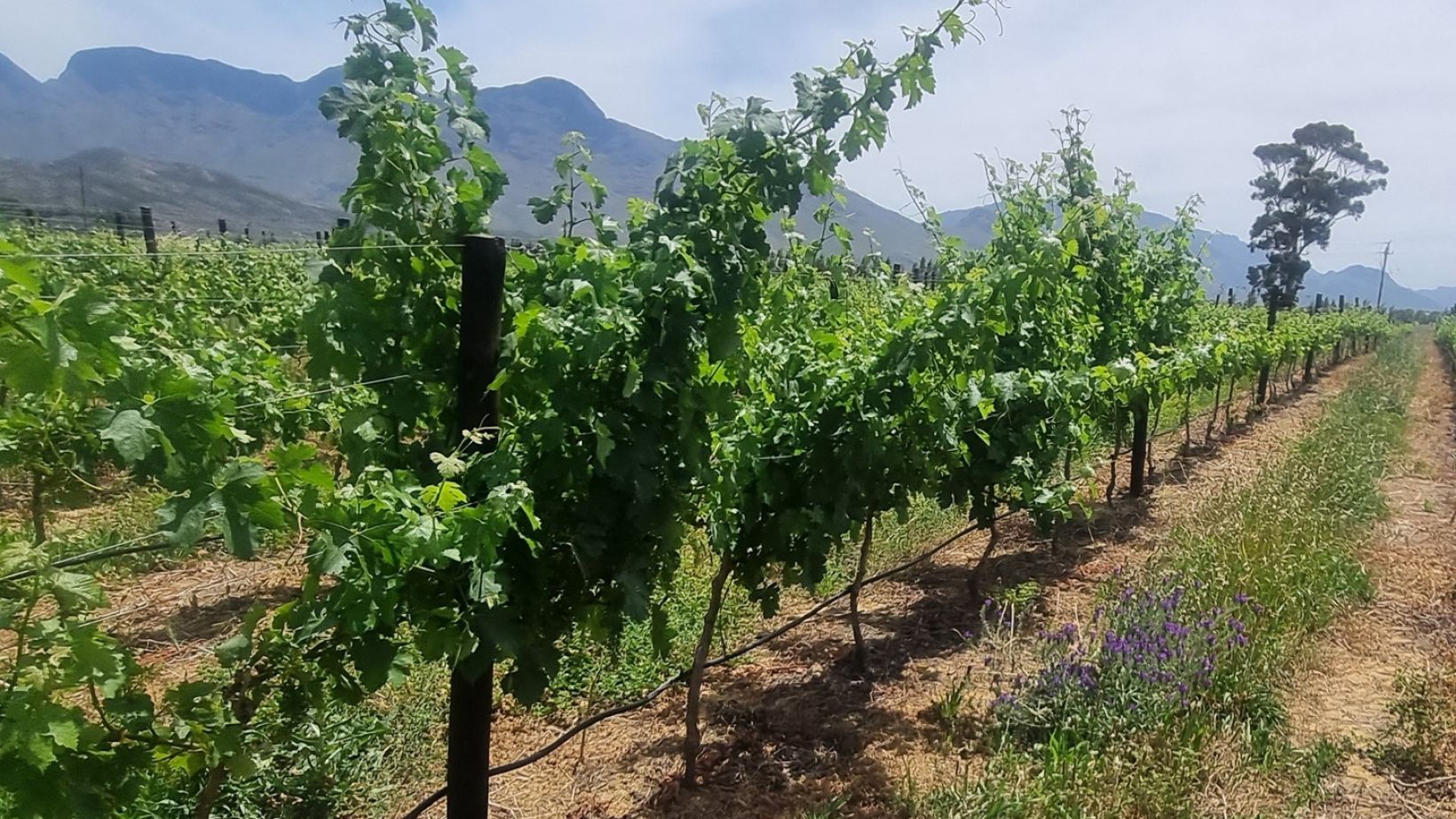
Continued pressure on wine grape producers to keep farming in a sustainably profitable way, is compelling them to be innovative in all aspects of their grape cultivation processes. This includes, inter alia, efforts to increase income, cut costs and optimise establishment processes.
One method to increase profitability is to bring vineyard blocks into full production more quickly. In this article, we refer to a case study in the Breedekloof area where a demo site of uber (tall) vines was planted in a Chardonnay and Cabernet Sauvignon block. The objective was to determine whether there are indeed economic benefits to the use of uber vines. The article aims to highlight a few benefits and challenges with the help of the case study and investigate the financial break-even figures.
Background and layout
An uber vine is a dormant grapevine (Photo 1), which is supplied to the producer in a planting bag with a primary shoot length of 1,2 - 1.5 m above the graft union. Uber vines can be grafted from normal one-year-old dormant vines that are replanted into a planting bag and then trained during the growing season to form the long shoot. The final uber vine is thus planted approximately 24 months after the grafting process. Some nurseries use a cartonage vine in a planting bag and train this vine during the growing season to supply the final vine to the industry approximately 12 months after the grafting process.
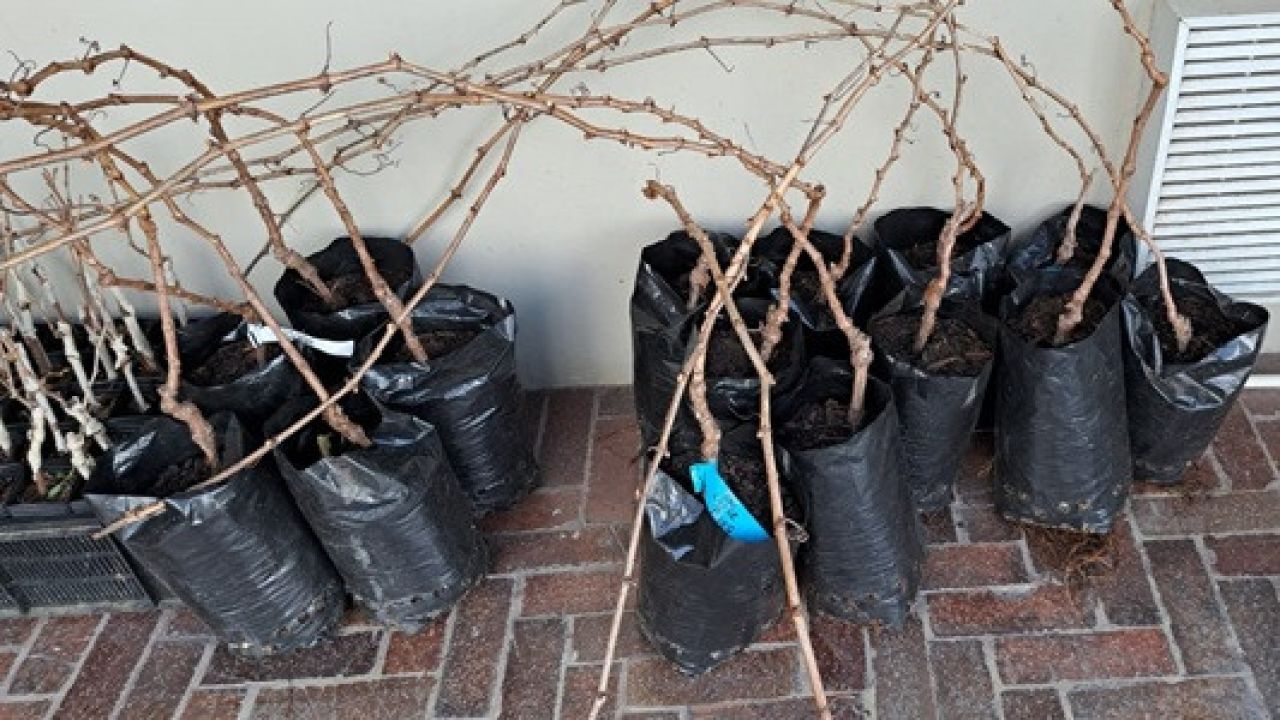
PHOTO 1. Dormant uber vines ready for establishment.
The normal establishment method in the Breedekloof area entails that vineyards are planted in July/August and that these vines are trained to form a “kierie” (vine stem) during the first winter after planting (in other words, a kierie vine is formed after 12 months from planting). In the second leaf (13 - 24 months after planting), the two cordon arms are developed from the kierie vine and fully trained onto the cordon wire. In most cases, 2 - 4 bunches are allocated per shoot during the second leaf. During the pruning period at 24 months, short bearers are pruned and allocated on the cordon. In the third leaf (25 - 36 months after planting), the bearers are suckered to one shoot per bearer and normally crop control of one bunch per shoot is applied.
In the trial, a determination had to be made whether the use of uber vines can accelerate the establishment/trellising process of the vineyard block by one year, as the vineyard is already planted with a kierie vine and by using this method, the trellising process of these experimental vines can be compared to a 13-month-old vine in the conventional trellising process.
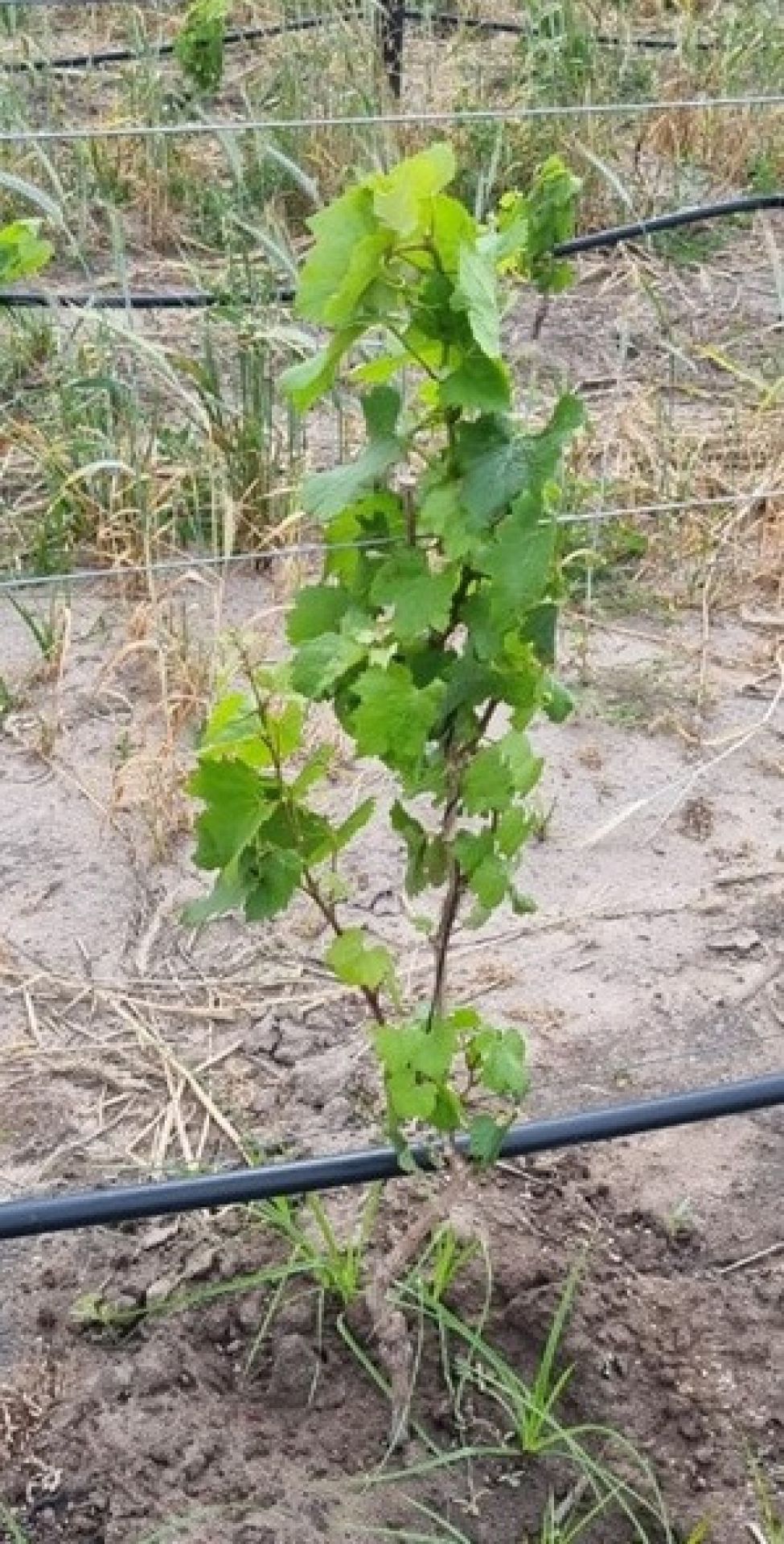
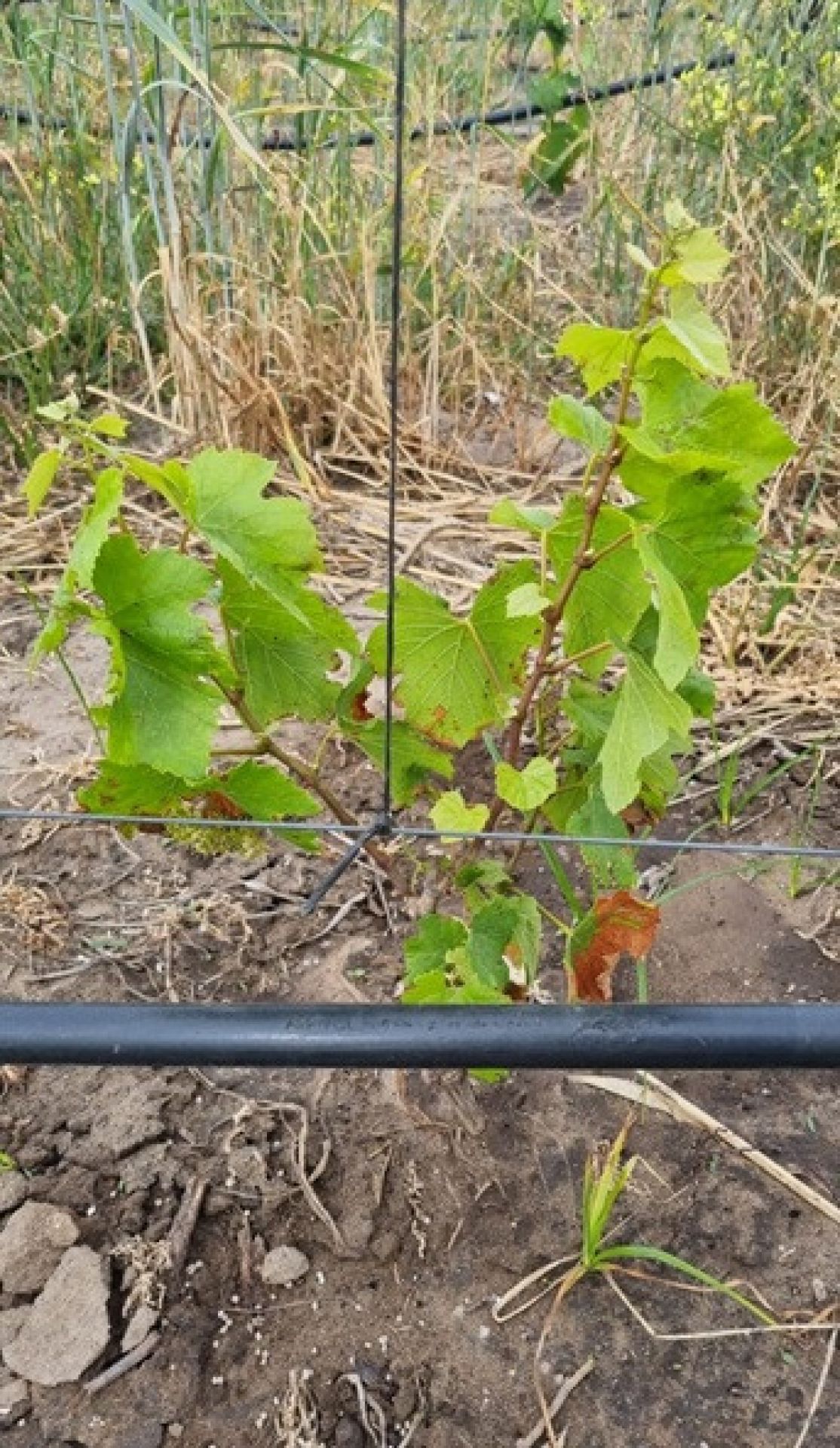
PHOTO 2 (LEFT). Uber vine – one month after planting.
PHOTO 3 (RIGHT). Conventional vine – one month after planting.
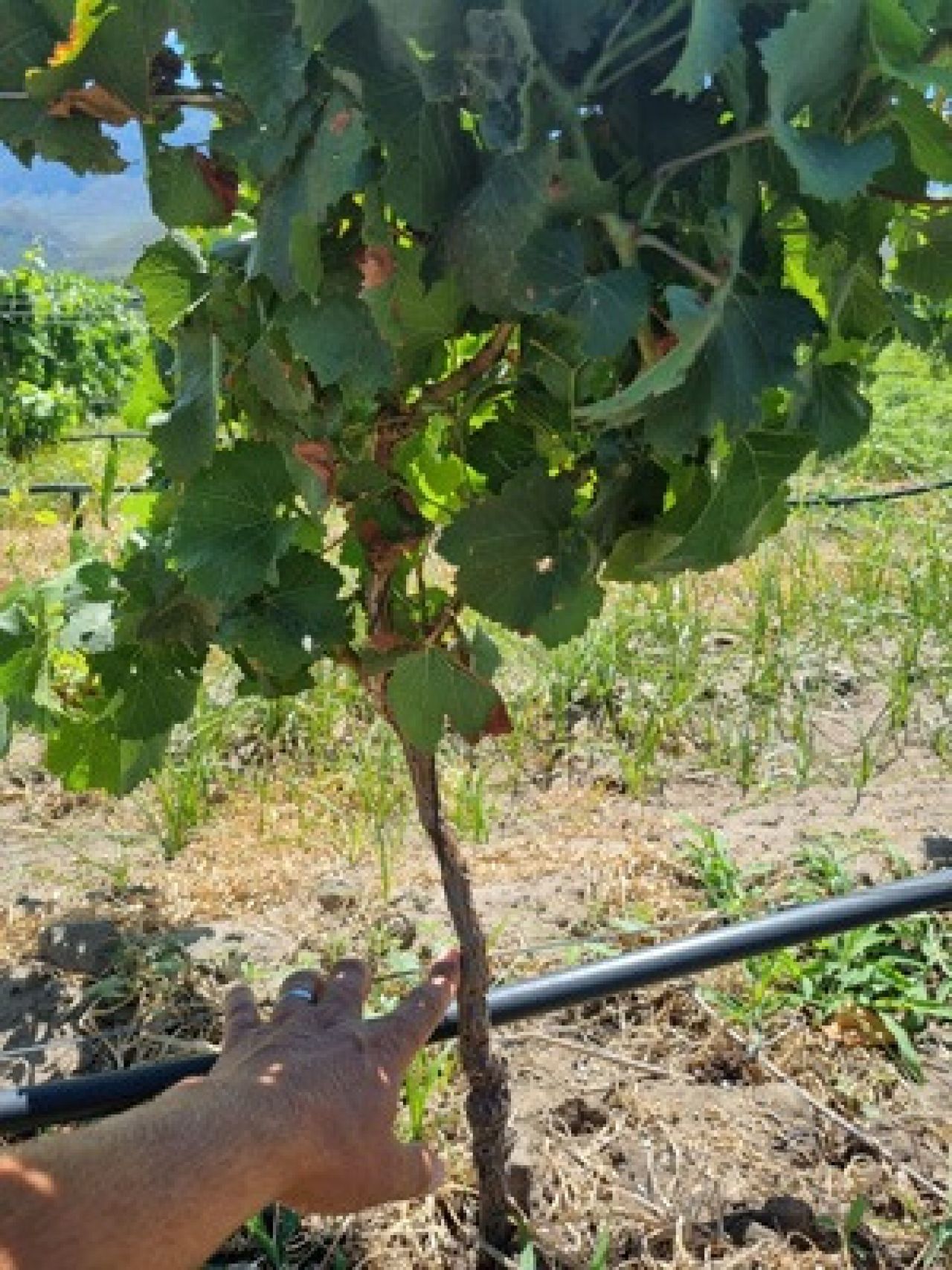
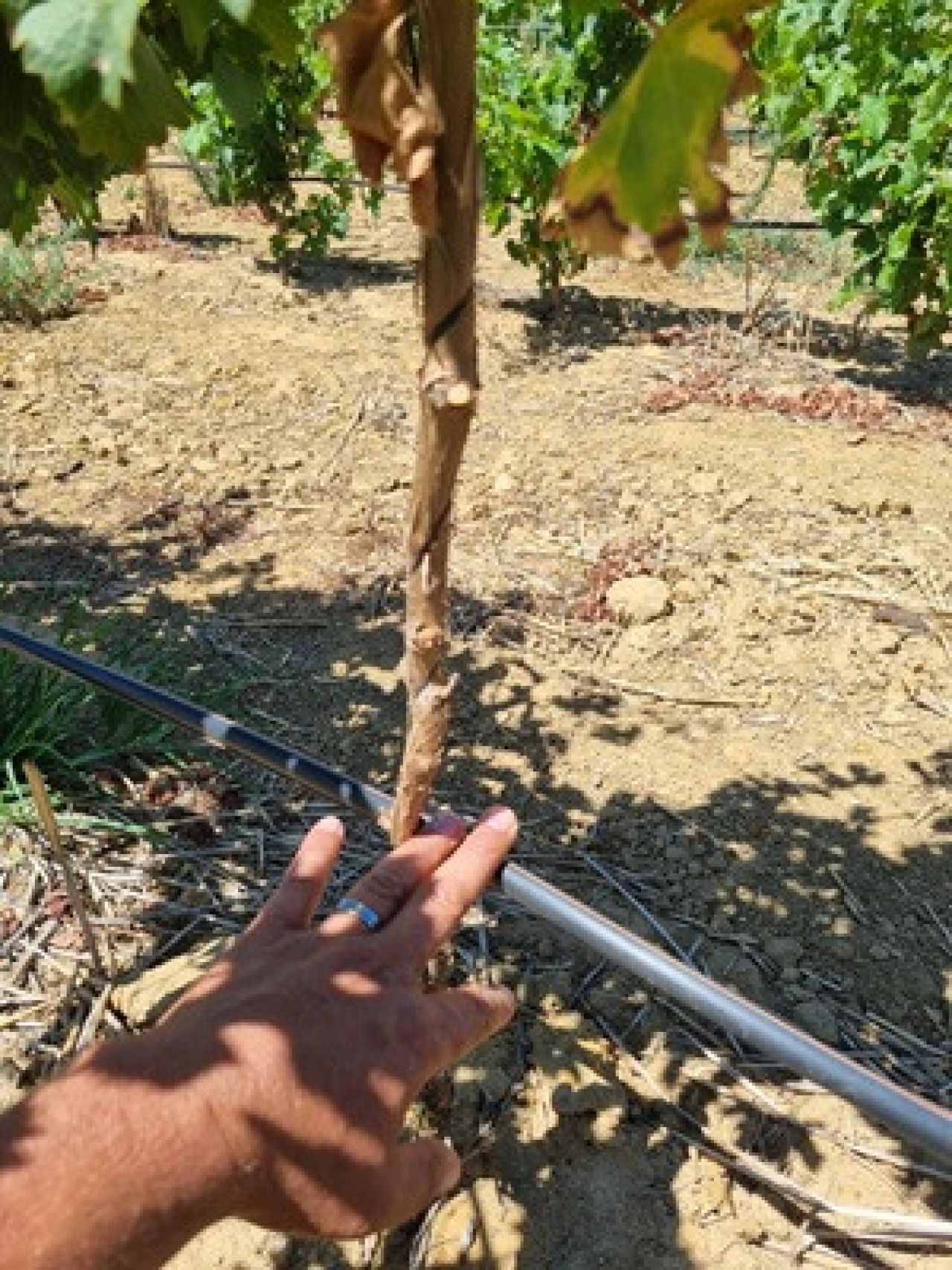
PHOTO 4 (LEFT). Uber Chardonnay – five months after planting.
PHOTO 5 (RIGHT). Uber Cabernet Sauvignon – five months after planting.
Benefits
There are several benefits to planting an uber vine compared to conventional vines:
- As the vine has already been trained using the kierie method, the cordon will be established faster and the vineyard will reach production earlier.
- The stem is a two-year-old shoot, meaning weed control with chemical agents will be safer, given that there is no green, actively growing tissue on the stem.
- The stems are already firmly upright when the uber vines are received from the nursery.
Drawbacks/challenges
The following challenges must be taken into consideration:
- The plant material is nearly double the cost per hectare when compared to the conventional method. The reason for this is mainly related to the increased nursery inputs to train and care for the vines during that first year.
- The transportation of uber vines is a huge challenge. Uber vines are transported in fruit crates to accommodate the long shoots, and this factor contributes to increased costs. In contrast, a traditional bundle of 50 dormant vines is considerably more compact and convenient to transport.
There are natural differences in the vigour and fertility of the various wine grape cultivars, and in fertile cultivars, overproduction in the early stage of the vine’s development can have detrimental consequences. The root development of the uber vine must take place optimally in the first 12 months, as the cordon is already established after the first 12 months. Conversely, the cordon of conventional dormant vines is only established in the 13 - 24-month period, which allows more time in situ for root development before having to support any crop load. A longer period of judicious crop control will possibly have to be applied on uber vines, especially in the first three years after planting, as this system’s above- and underground growth do not necessarily balance out faster, as explained.
Developmental differences
Major differences between the two treatments were already observed in the second leaf (15 months after planting). The uber vines display more active growth after being planted out, and it may be the case that uber vines derived from planting bags with medium experience less replanting shock compared to the usual bare-rooted conventional dormant vines. The stem thickness of uber vines for both Chardonnay and Cabernet Sauvignon was notably thicker after 15 months compared to the conventional vines. Due to the good vigour, the vines will however be able to ripen the allocated bunches during the harvest season at approximately 18 - 20 months.
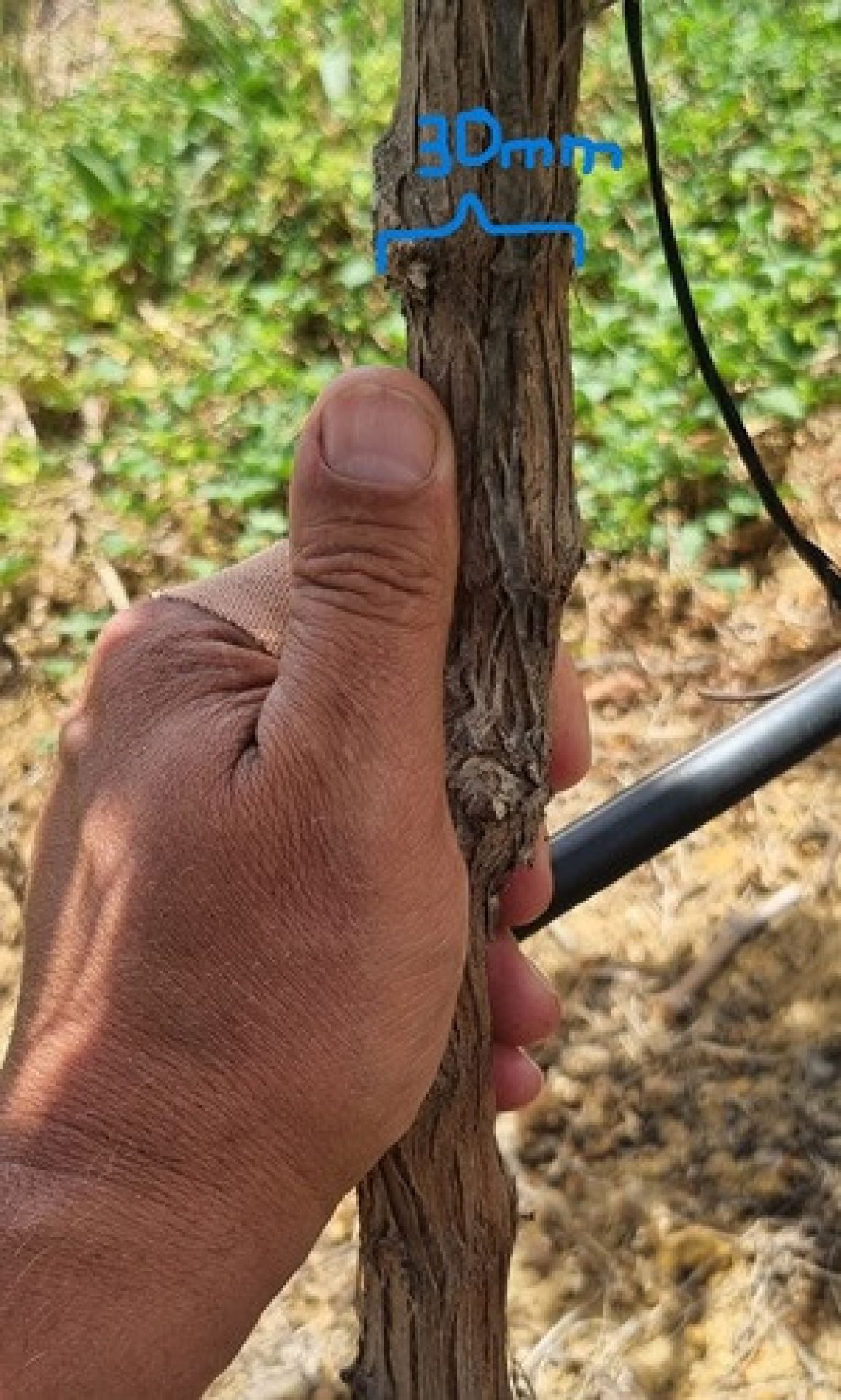
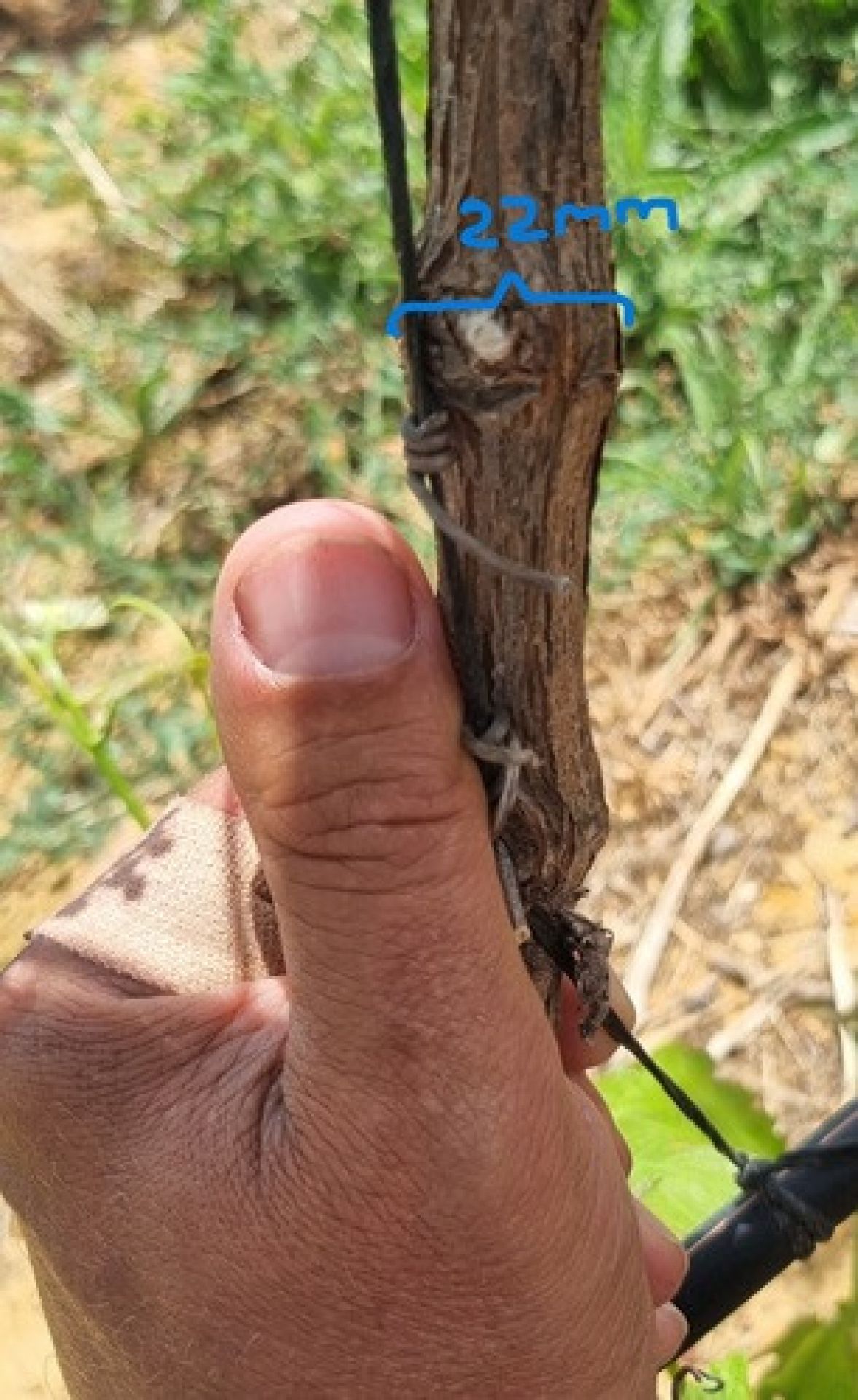
PHOTO 6 (LEFT). Stem thickness of uber Cabernet Sauvignon 15 months after planting.
PHOTO 7 (RIGHT). Stem thickness of conventional Cabernet Sauvignon months after planting.
Canopy and crop appearance
The uber vines filled the cordon wire after the first year, and in the second leaf good bud break was observed. The bearers of these second-leaf vines were suckered to one shoot per bearer and crop control of one bunch per shoot was required. This crop control action should produce a crop of 7 - 8 tonnes/ha during the harvest of the 18 - 20-month-old Chardonnay and Cabernet Sauvignon uber vines. It compares well to the crop of 30 - 32-month-old conventional vines in the Breedekloof area.
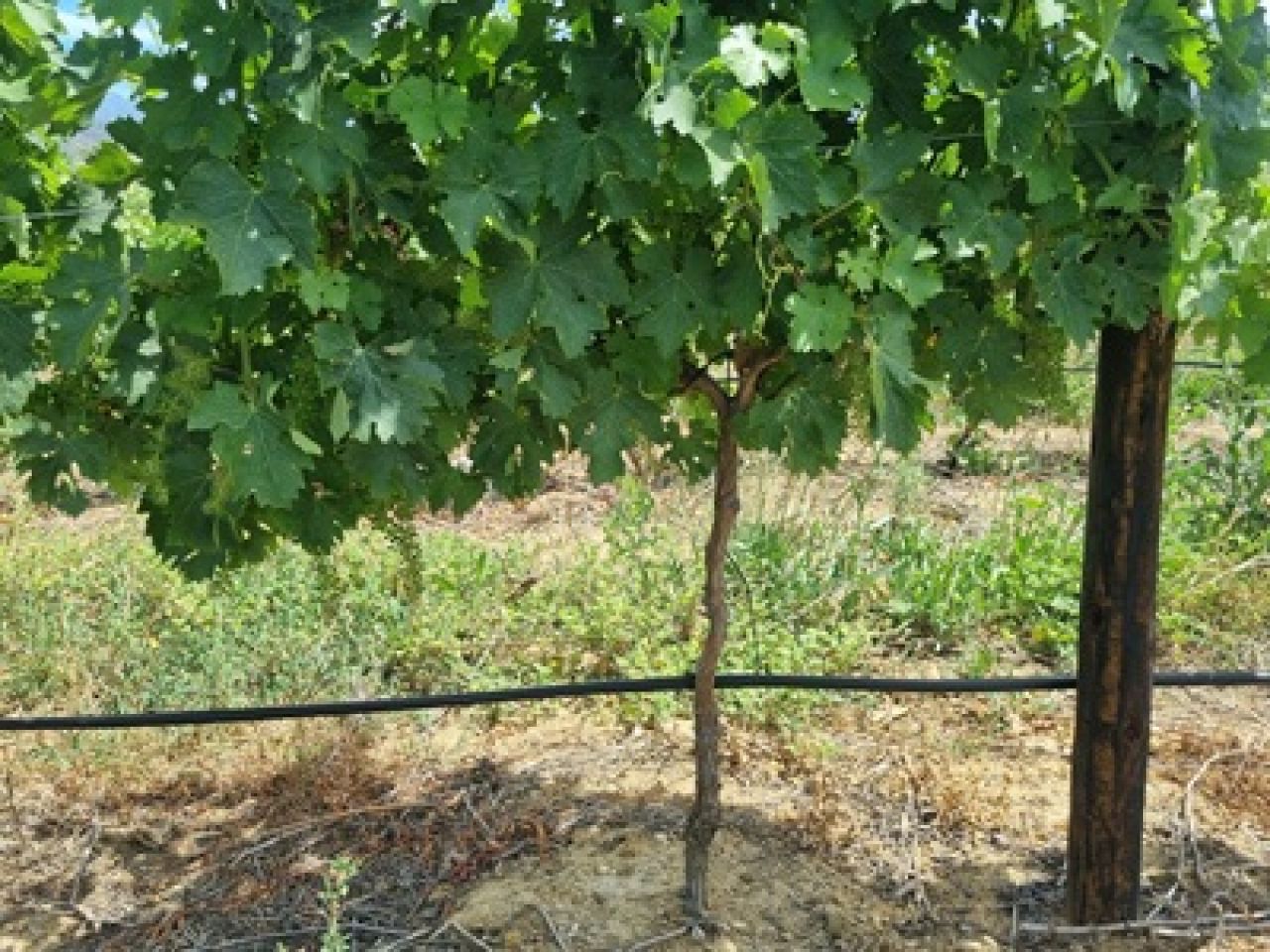
PHOTO 8. Fully developed Cabernet Sauvignon uber vine. 15 months old, before crop control.
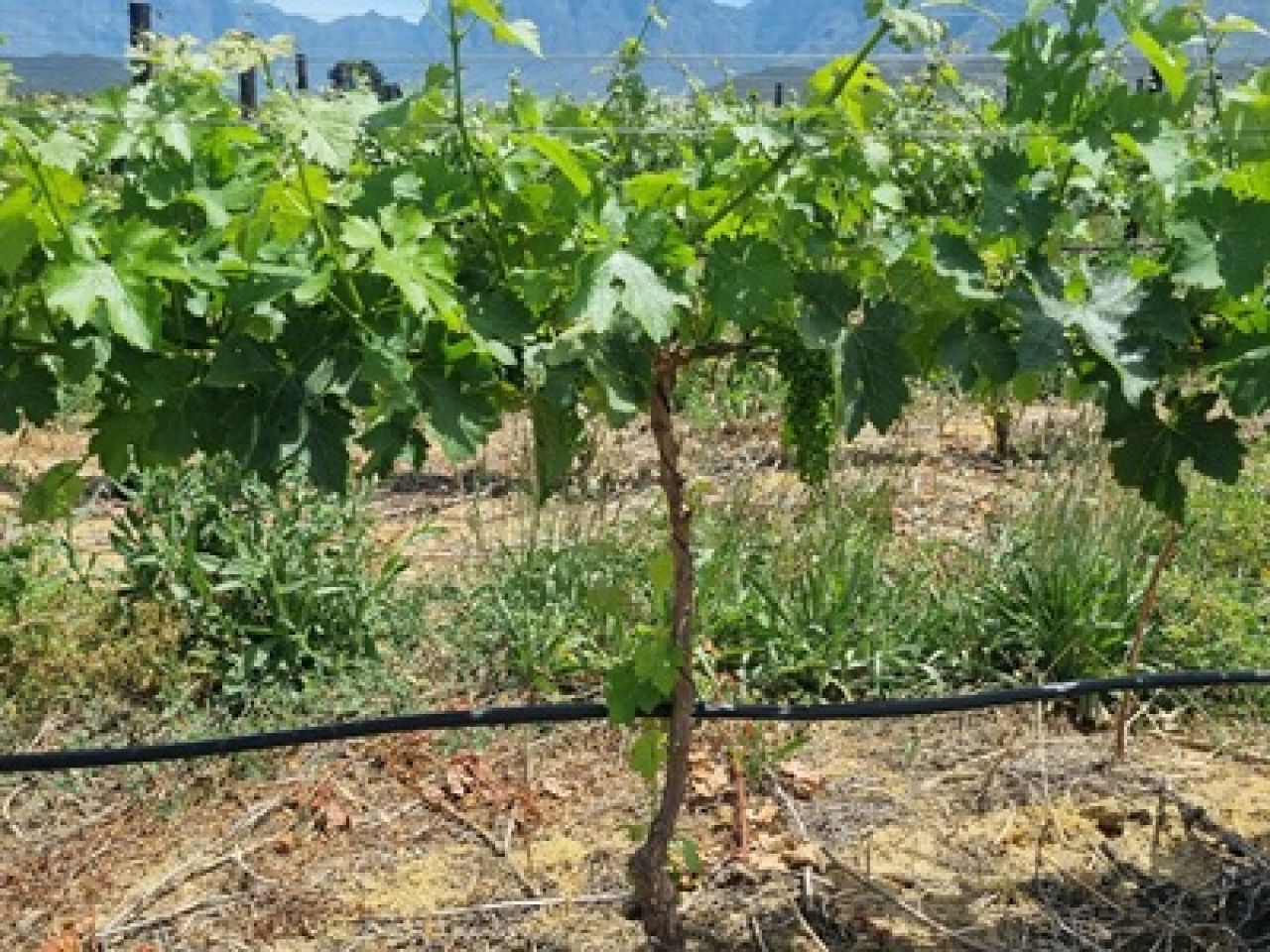
PHOTO 9. Fully developed Cabernet Sauvignon conventional vine. 15 months old, four bunches per vine.
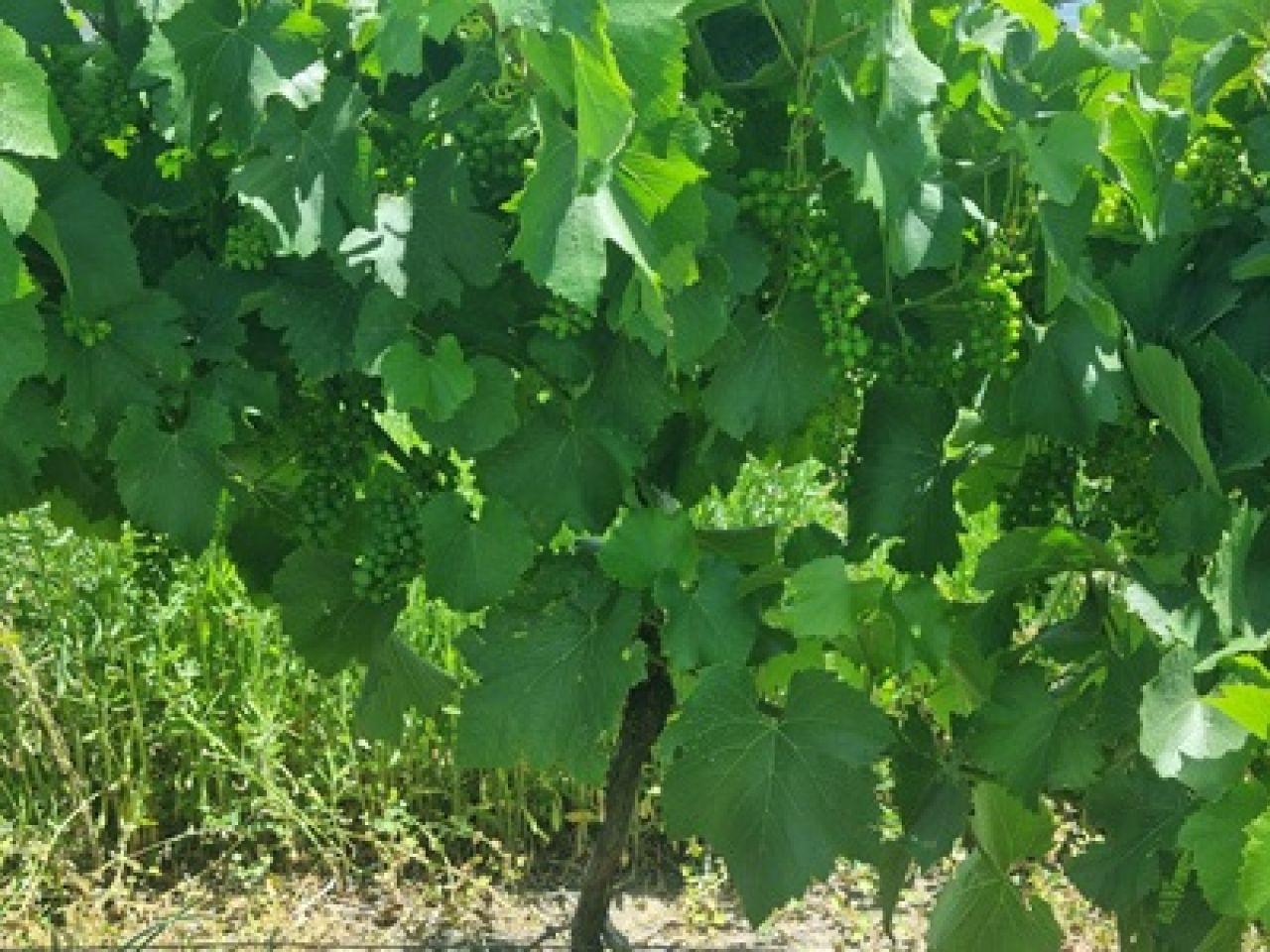
PHOTO 10. Fully developed Chardonnay uber vine. 15 months after planting, before crop control.
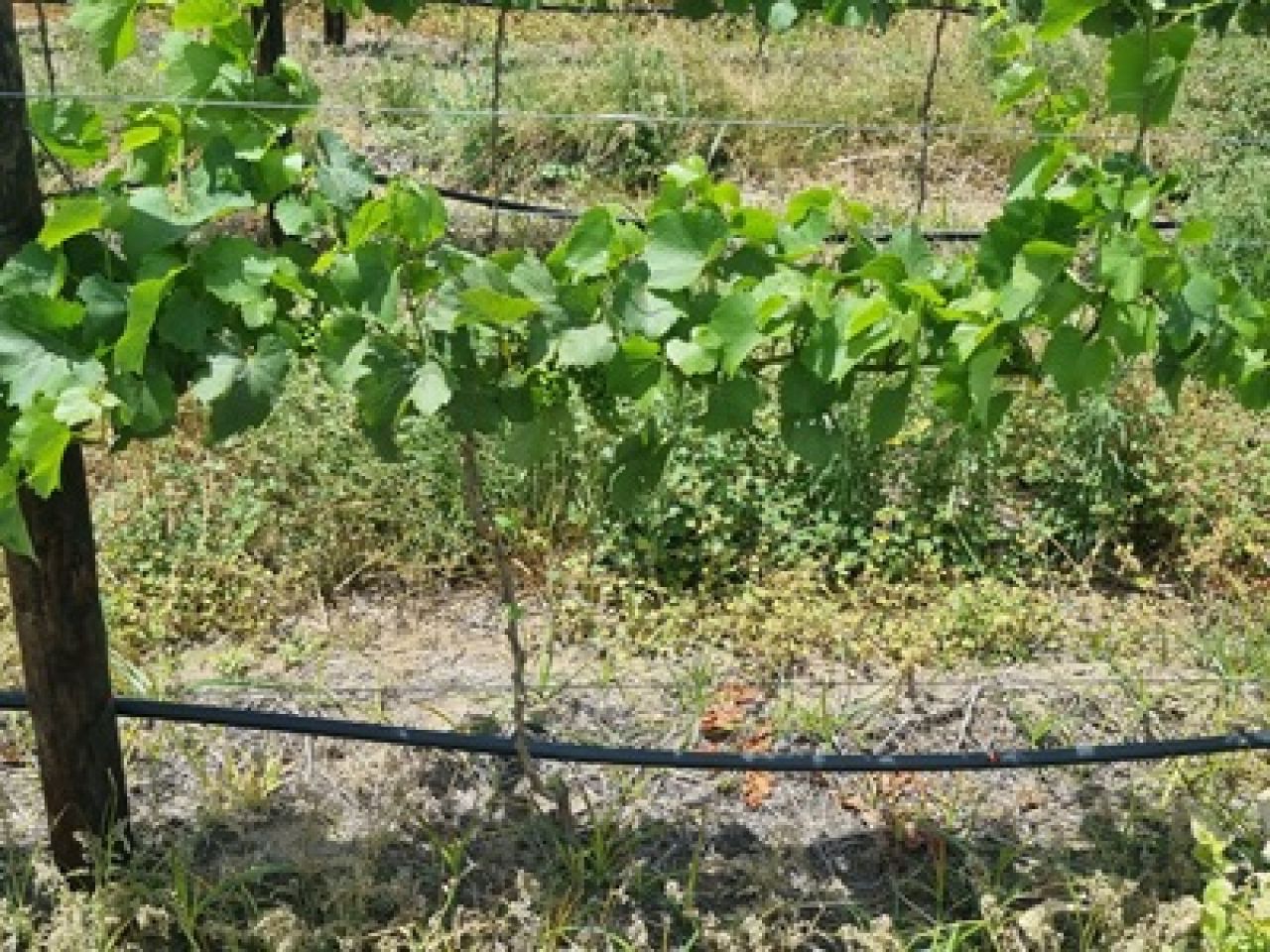
PHOTO 11. Fully developed Chardonnay conventional vine. 15 months after planting, crop control applied of four bunches per vine.
Findings and break-even
The use of uber vines rather than conventional vines indicates that in the Breedekloof area, with the current planting and trellising methods, it would be possible to get a vineyard block into full production earlier if high-quality uber vines are used.
In the case of this trial, uber vines yielded a total of 29 tonnes per hectare in production years two and three, compared to the total of 11 tonnes per hectare over the same production years for conventional vines. It appears, however, that there are significantly more production costs in planting years one, two and three for the uber vines as opposed to the conventional method. This accelerated establishment and production taking effect will make economic sense despite the increased input costs in years one, two and three due to increased canopy actions and fertiliser costs.
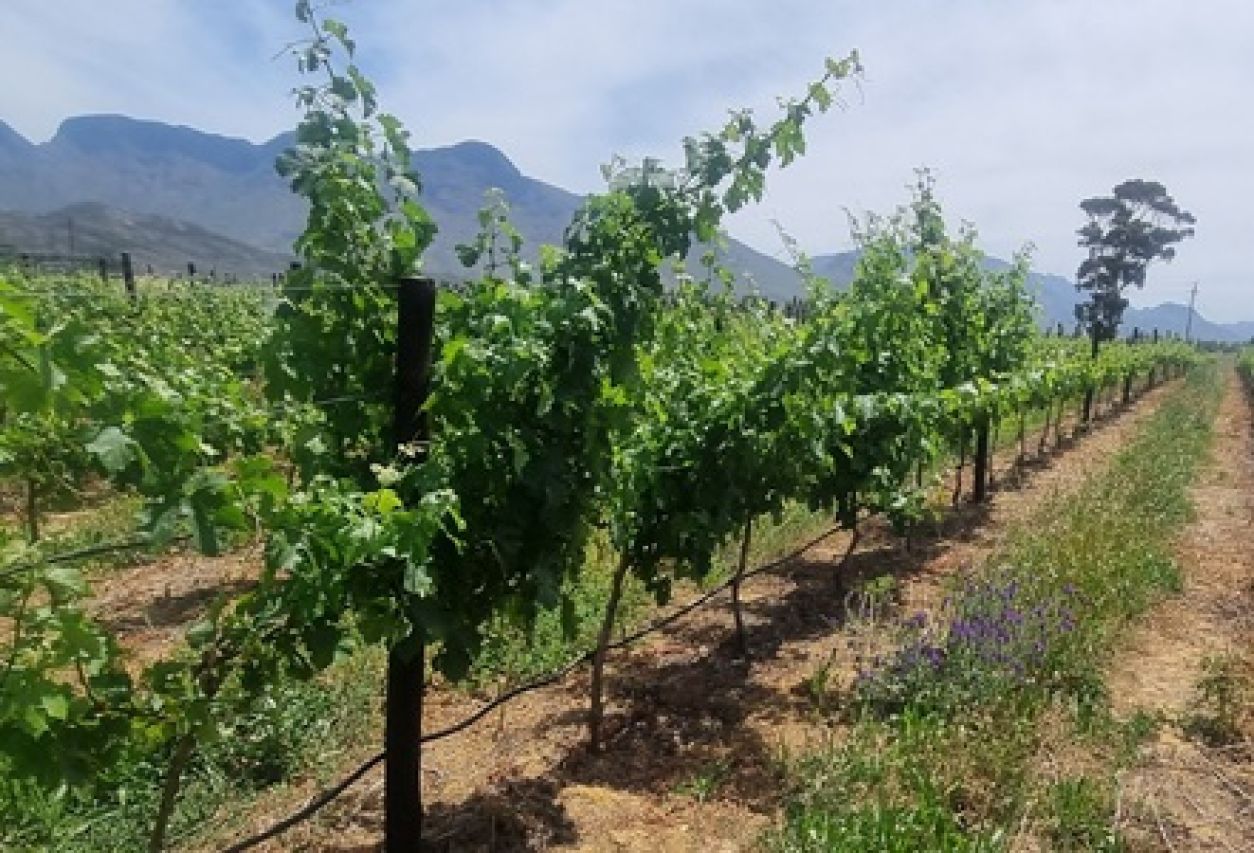
PHOTO 12. Cabernet Sauvignon uber vines in the foreground, compared to conventional vines in the background, 18 months after planting.
From the demo site, it was evident that the additional 18 tonnes of grapes harvested in the second and third year after planting, were sufficient to discount the increased plant material cost, as well as the increased labour and fertiliser costs. It is important, however, to point out that cultivar reactions and management practices may vary, and that this establishment method might not be suitable for all wine grape cultivation regions.
For more information, contact Callie Coetzee at [email protected].
Click here to get your copy of WineLand Magazine.

More from
Vineyard, cellar and production
How to understand regenerative farming
Regenerative farming is becoming part of the language of modern viticulture, but what does it actually look like in a vineyard?
JC Smith praat oor wynmaak in die Oos-Vrystaat
JC Smith is ’n derdegeslag-wynmaker. Sy oupa Dassie en pa Flip was albei wynmakers, en hy het tussen wingerde en wynkelders grootgeword. Hy is tans die wynmaker by Blydschap in die Oos-Vrystaat.
Cellar hygiene
Maintaining a spotless wine cellar requires a comprehensive management plan, which includes structural design, equipment sanitation, environmental controls and routine microbial monitoring.