
Risk management for wine cellars
· 3 min read
VINEYARD AND CELLAR UPDATESince the beginning of the wine industry during the Middle Ages, continuous changes have led to risk management becoming more important. The risk exposure of wine cellars ranges from the vineyard to the wine consumer. All actions executed during this production cycle, as well as factors influencing it, contain potential risks. Production substances and the equipment used during the production chain increase these risks, which are not only limited to the health and safety of employees.Risk management is a specialist field, which usually does not receive sufficient attention during the training of winemakers. It compels wine cellars to use consultants. In order to execute risk management effectively, certain measureable results must be interpreted. One of these are Total Cost of Risk (TCOR), which expresses the indirect and direct risk management costs versus sales. If it is charted over time, it is an indication of the efficiency of the specific risk management programme. Risk management consultants usually recommend a committee consisting of managers over the full management spectrum and it usually consists of the Chief Executive Officer (CEO), Chief Financial Officer (CFO), production, operational, safety, logistics and sales personnel.The eventual aim of risk management is the decrease of uncertainty, which implies that the cellar’s activities and its results must be sustainable. Examples of risks that wine cellars are exposed to, include resources like electricity and water, product tampering, product recall, earthquakes, floods, cyber threats, intellectual property, copyrights, trademarks, media liability, product liability, pollution, production substances and packaging material. After the potential risks have been identified, it must be decided how to manage them. Ways to limit the risks or minimise their results, is the first option and insurance is usually only recommended for disastrous risks. One of the main potential risk costs is the compensation of employees for workplace injuries. It can however be decreased, if it is managed correctly. Injuries in the cellar do not only influence the safety and health of employees, but also the profit of the cellar. It can usually be prevented and 90% of it can be attributed to human behaviour and only 10% of workplace accidents can be attributed to threats and equipment. The magnitude of it can be diminished by loss control training of employees or the use of temporary workers, in which case insurance is not required. The latter can however be detrimental, because temporary workers are not necessarily properly trained or exposed to a work culture. The work culture of wine cellars is critical to prevent such accidents and management training of managers and supervisors, as well as the empowerment of personnel regarding safety, is essential to maintain such work culture. |
Although traditional insurance companies are active in the wine industry, alternative risk financing must also be considered. It has loss incentives and premiums are linked to claims. Large cellars can also consider self-insurance and the creation of an insurance profit centre can be part of this.
If cellars have a risk management programme, it must be monitored regularly and modified, if necessary. Insurance of buildings, tanks, bulk and bottled wine, equipment, business interruption, vehicles, aviation, injuries, emergency and disasters are all part of any form of risk insurance (Goldfarb, 2016; Niebuhr, 2016).
References
Goldfarb, A., 2016. Off-setting workers’ compensation costs. Wine Business Monthly, April 2016: 70 - 73.
Niebuhr, Mark, A., 2016. Risk management ABC’s for the wine industry. Vineyard & Winery Management, March/April 2016: 106 - 109.

More from
Vineyard, cellar and production
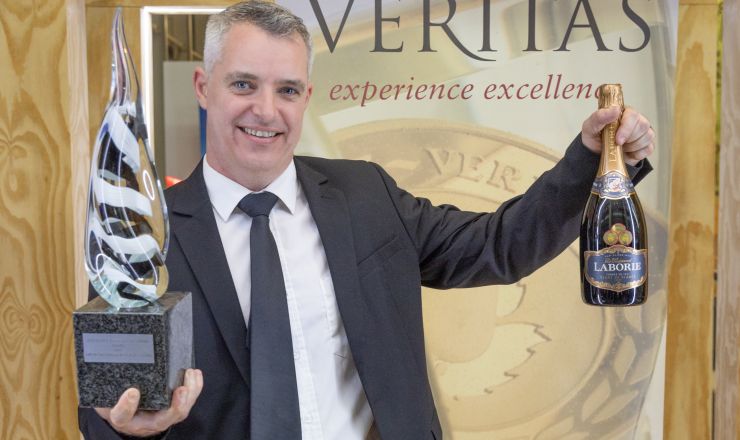
One vineyard. Eight components. Five years of patience.
When KWV’s Laborie Blanc de Blancs 2020 claimed the Duimpie Bayly Vertex Trophy at the 2026 Veritas Awards, it was more than another win for the Paarl-based producer. It was only the third time a Cap Classique had taken the competition’s highest honour, selected from 1 293 entries.
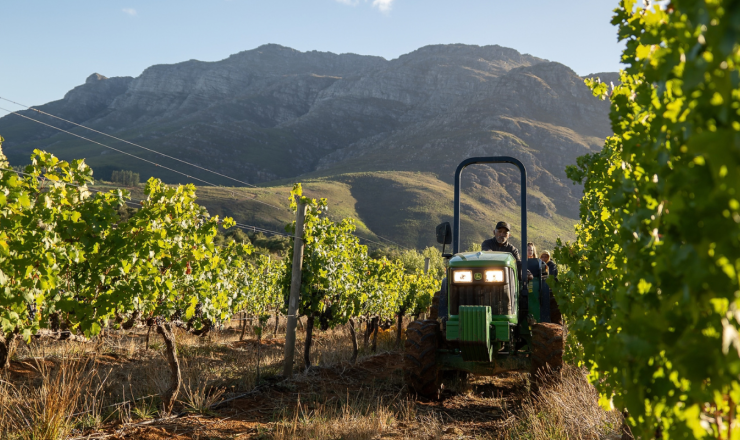
How to understand regenerative farming
Regenerative farming is becoming part of the language of modern viticulture, but what does it actually look like in a vineyard?
JC Smith praat oor wynmaak in die Oos-Vrystaat
JC Smith is ’n derdegeslag-wynmaker. Sy oupa Dassie en pa Flip was albei wynmakers, en hy het tussen wingerde en wynkelders grootgeword. Hy is tans die wynmaker by Blydschap in die Oos-Vrystaat.