
The price of progress
Technology promises greater efficiency and resilience, but access, cost and its effect on people deserve closer scrutiny.
· 3 min read

South Africa’s vineyards are becoming smarter. Soil probes can flag water stress, aerial imagery can expose uneven growth, and mechanical harvesters can bring in grapes at speed. But behind the language of innovation, we continue to question whether producers can afford to modernise. Does technology solve the industry’s biggest problems or risk widening the gap between producers?
The pressure to change isn’t going to disappear anytime soon. South Africa had 2350 wine-grape producers farming 86544 hectares in 2024, compared with 4599 producers cultivating 84 030 hectares in 1994. The area under vines has also fallen from approximately 110 000 hectares in 2003 and 2004. This points to a more consolidated industry attempting to produce efficiently amid economic, climatic and market pressures.
South Africa Wine RDI (formerly Winetech) has responded by developing an innovation network that connects researchers, start-ups and producers to test new tools against industry problems. It promises more informed irrigation, earlier identification of vineyard variation, more precise harvesting and tighter control over production.
However, South Africa Wine itself stresses that innovation requires operational readiness and a functioning ecosystem, not technology alone.
Adoption is not simply a matter of buying the latest equipment. Scale, terrain, available capital, staff capabilities and the style of wine being produced all influence whether a technology delivers value.
A University of the Free State study involving 91 Western Cape wine-grape producers found that mechanical harvesting was more profitable on farms with approximately 100 hectares under vines than on those with 40 hectares. Larger operations in the Breede Valley were consequently better positioned to adopt the technology than smaller Stellenbosch properties.
The study also complicates one of the most contentious questions surrounding mechanisation. Among the farms surveyed, mechanical harvesting did not reduce seasonal or permanent labour demand.
This does not settle the employment debate, but it indicates that technology’s effect depends on how it is introduced and which tasks it replaces, changes or creates. The researchers also called for further investigation before broader conclusions are drawn.
“There is a great deal of excitement around technology in the wine industry, but every new tool needs to prove that it can solve a real problem,” says Karl Lambour, General Manager of Tokara Wine and Olive Estate. “Cost, scale, skills and the realities of individual farms all influence whether innovation delivers meaningful value. The producers leading change are those testing technology carefully, measuring the results and combining data with human experience.”
Data may identify a stressed vineyard block, but people must still interpret the information and decide how to respond. A machine may improve timing or efficiency, but it cannot define the character and quality ambition of a wine.
The Winelands’ champions of change may therefore be neither the fastest adopters nor the biggest spenders. They are the producers, researchers and teams willing to test claims, measure results and reject tools that fail to deliver.
The next phase of wine technology should be judged by whether it makes farms more resilient, resources more productive and skilled people more valuable.

More from
Vineyard, cellar and production
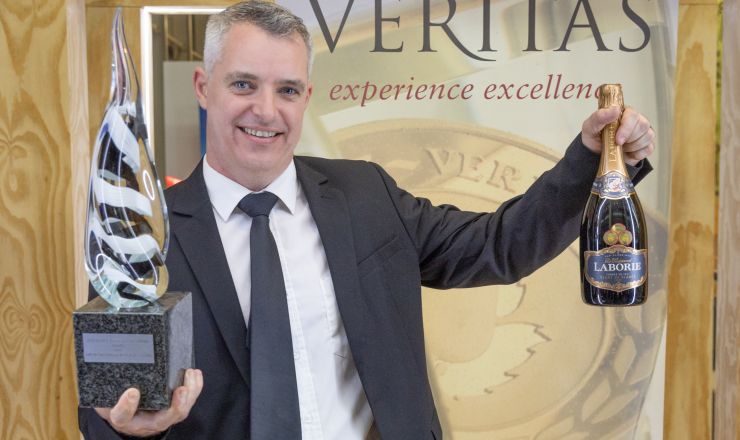
One vineyard. Eight components. Five years of patience.
When KWV’s Laborie Blanc de Blancs 2020 claimed the Duimpie Bayly Vertex Trophy at the 2026 Veritas Awards, it was more than another win for the Paarl-based producer. It was only the third time a Cap Classique had taken the competition’s highest honour, selected from 1 293 entries.
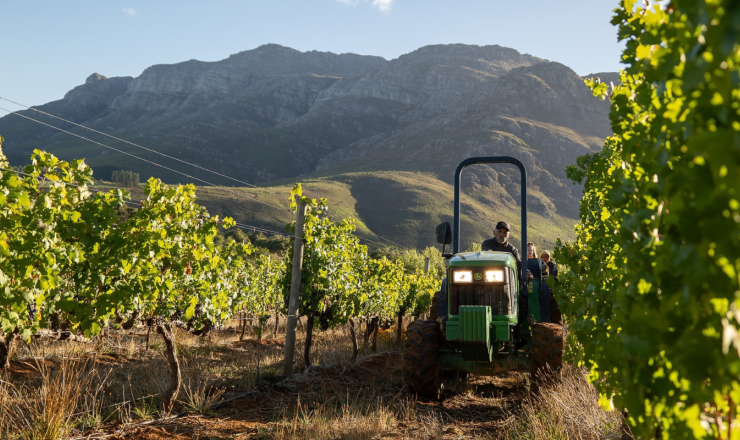
How to understand regenerative farming
Regenerative farming is becoming part of the language of modern viticulture, but what does it actually look like in a vineyard?
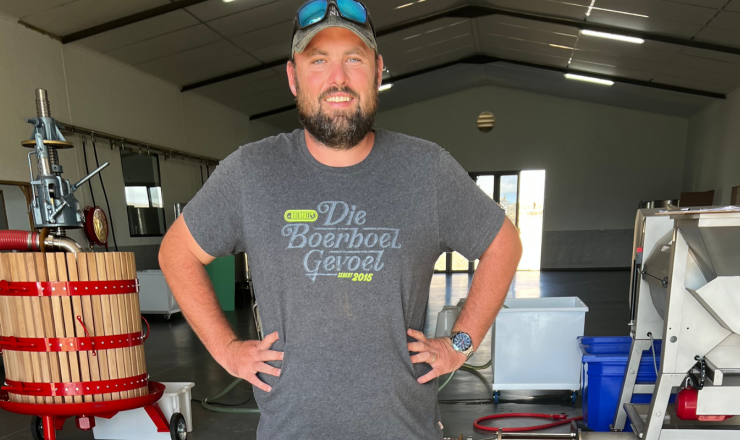
JC Smith praat oor wynmaak in die Oos-Vrystaat
JC Smith is ’n derdegeslag-wynmaker. Sy oupa Dassie en pa Flip was albei wynmakers, en hy het tussen wingerde en wynkelders grootgeword. Hy is tans die wynmaker by Blydschap in die Oos-Vrystaat.