
Winetech vine and wine innovation watch: Fighting vineyard pathogens with UV light
· 4 min read

Powdery mildews have been around for millions of years. As time progressed, they evolved and are acutely able to sense and utilise light to develop optimally. Knowing this, scientists can cleverly use their superpowers against them.
Is this completely new technology?
No. In fact, the powers of UV light against fighting pathogens have been investigated at Cornell Agritech since the early 90’s. Research, however, showed that the amount of UV light necessary to kill pathogens also caused damage to foliage.
Then a breakthrough!
Decades later, a researcher in Norway discovered that when UV treatments are applied at night, much lower doses were required to suppress pathogens – leaving the plants out of harm’s way.
What is different at night?
UV light damages the genetic code of living organisms. Pathogens can sense light and have developed mechanisms to protect themselves by repairing the damage caused by UV light. Scientists have discovered that the efficiency of these mechanisms are improved by blue light and UV-A, whereas it is reduced by red light and darkness.
Are all UV lamps made equal?
Certainly not. Different types of lamps are available, each with its own pros and cons. Researchers are still experimenting with and evaluating different options.
Taking it to the field
Moving from stationary greenhouse experiments to mobile applications in the field always has its challenges. Apart from taking canopy architecture into consideration, the technology has to be cost-effective, practical and efficient and should be effective (preferably at normal tractor speeds).
Does it work?
Preliminary field trials conducted over two years on strawberries (and other crops) showed very promising results. Not only was better powdery mildew control achieved compared to the best fungicides, the treatments did not adversely affect plants or yields. One important consideration is the fact that four hours of darkness is still needed after application to ensure that the treatment takes effect.
What about grapevines?
Results of trials on grapevines were very promising. Severity of powdery mildew in untreated vines was 15%. UV treatments significantly reduced the severity of powdery mildew on berries to 5%, compared to fungicide treatments which reduced severity to 1%. In a surprising result, UV treatments also suppressed foliar downy mildew, much better than fungicides did. Interesting that UV treatments directly affect powdery mildew pathogens, but control of downy mildew was achieved because the UV light improved host resistance to the pathogen.
Preliminary results also indicated that UV treatments can suppress mite populations.
What next?
Commercial trials in different regions in the United States are under way. At Cornell, they are experimenting with autonomous robots to apply the treatments to grapevines – better for working night shifts and the added advantage that they don’t use fossil fuels.
Be warned!
This is not a DIY project. The UV array’s design has to be tailor made for each crop and target pest. On top of that, the calibration of the array is a complex science in itself. UV light can also be harmful to operators if the arrays are not properly covered. The right technical expertise is required to operate the equipment.
Bringing it home
At the 2019 Winetech Pitching Den competition held at the SA Innovation Summit, the second place winner was UV Boosting, a French company that employs UV technology to fight pathogens. Part of their prize was funding for business development in South Africa and they are committed to doing field trials locally.
Why is this type of technology relevant?
It is widely known that there is increasing pressure on growers to reduce the use of fungicides and pesticides. Resistant varieties is still a new field and consumers’ reaction to unknown varieties is a concern. Using UV light has promising potential to be an alternative to fungicides in an integrated management strategy.
Reference
Gadoury, David M., 2019. The potential of light treatments to suppress certain plant pathogens and pests. Research Focus 2, Cornell Viticulture and Enology.
– For more information, contact Lucinda Heyns at [email protected].

More from
Vineyard, cellar and production
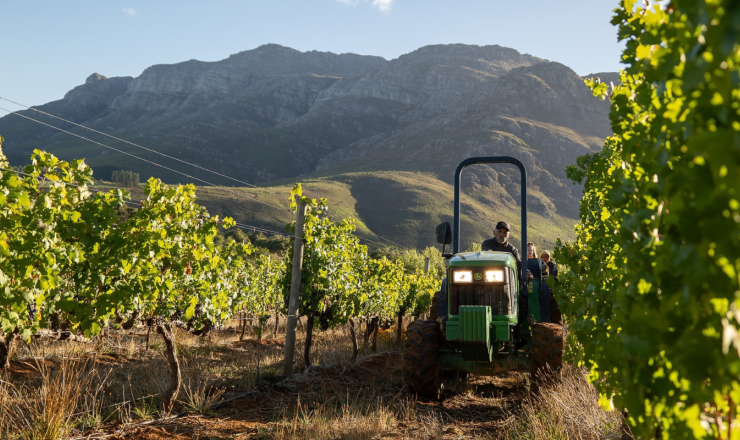
How to understand regenerative farming
Regenerative farming is becoming part of the language of modern viticulture, but what does it actually look like in a vineyard?
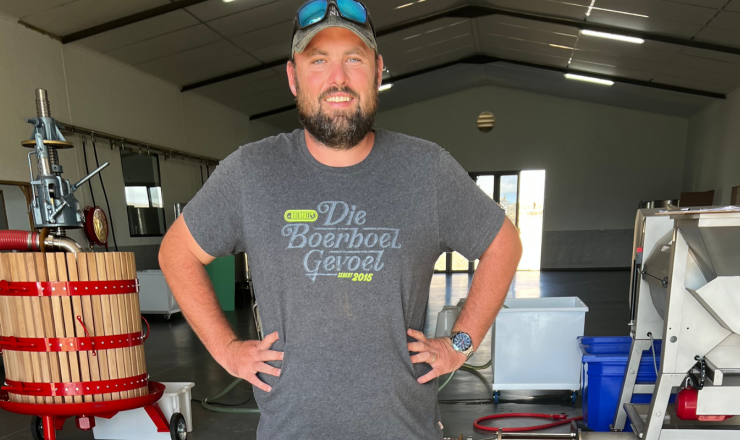
JC Smith praat oor wynmaak in die Oos-Vrystaat
JC Smith is ’n derdegeslag-wynmaker. Sy oupa Dassie en pa Flip was albei wynmakers, en hy het tussen wingerde en wynkelders grootgeword. Hy is tans die wynmaker by Blydschap in die Oos-Vrystaat.
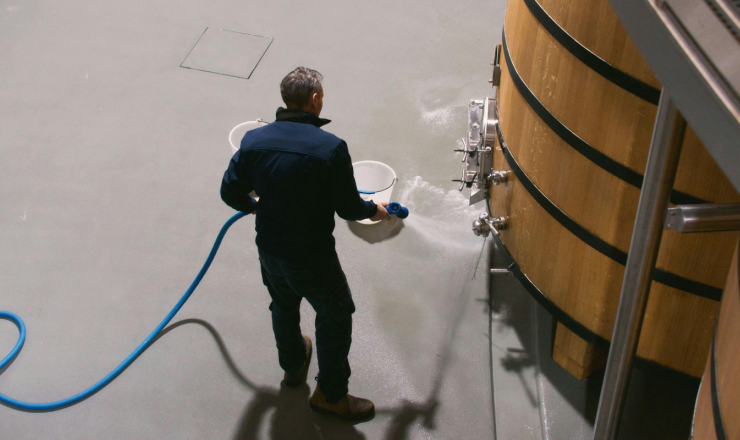
Cellar hygiene
Maintaining a spotless wine cellar requires a comprehensive management plan, which includes structural design, equipment sanitation, environmental controls and routine microbial monitoring.