
Q&A with Matija Lesković (PhD)
· 6 min read
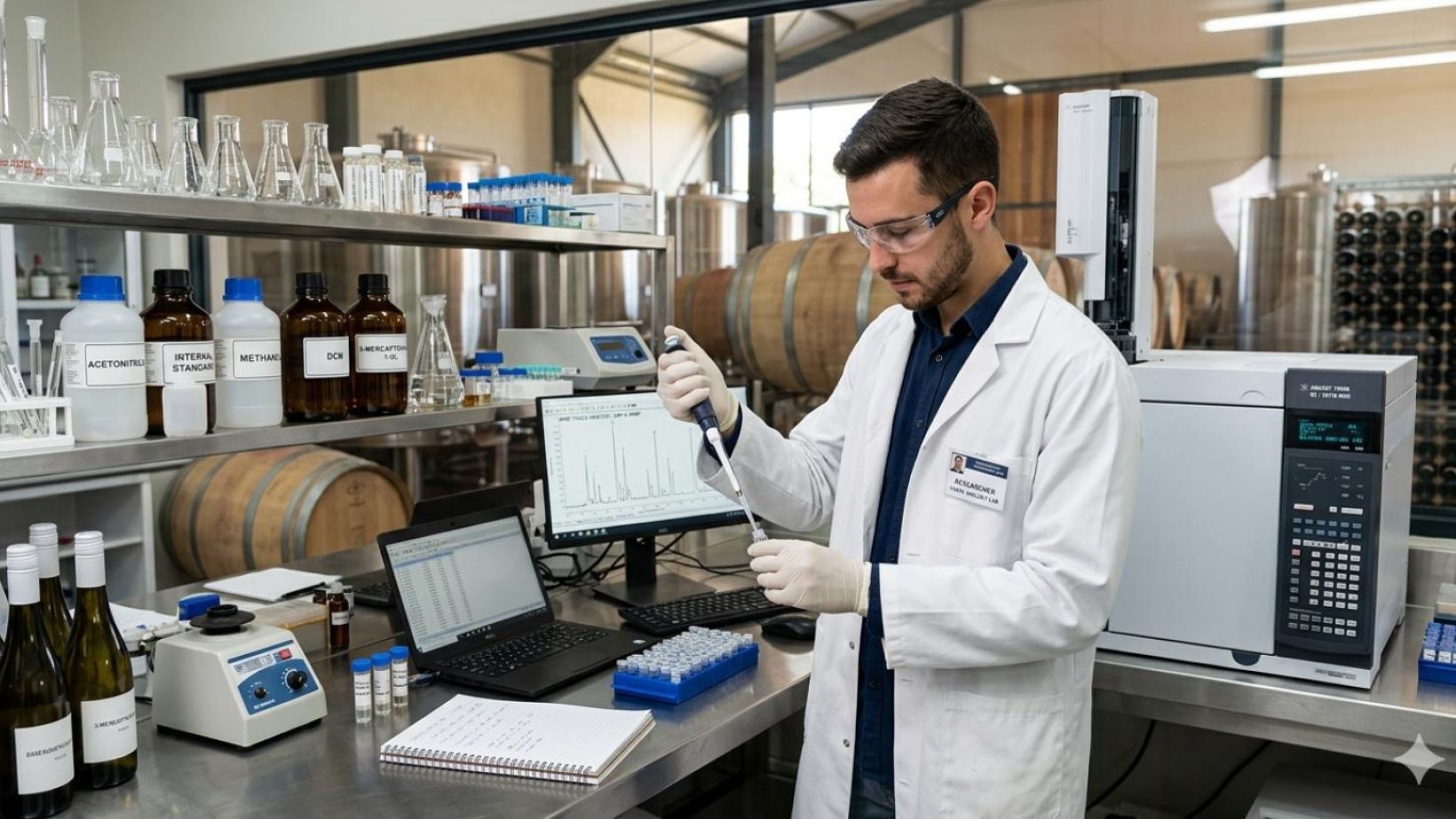
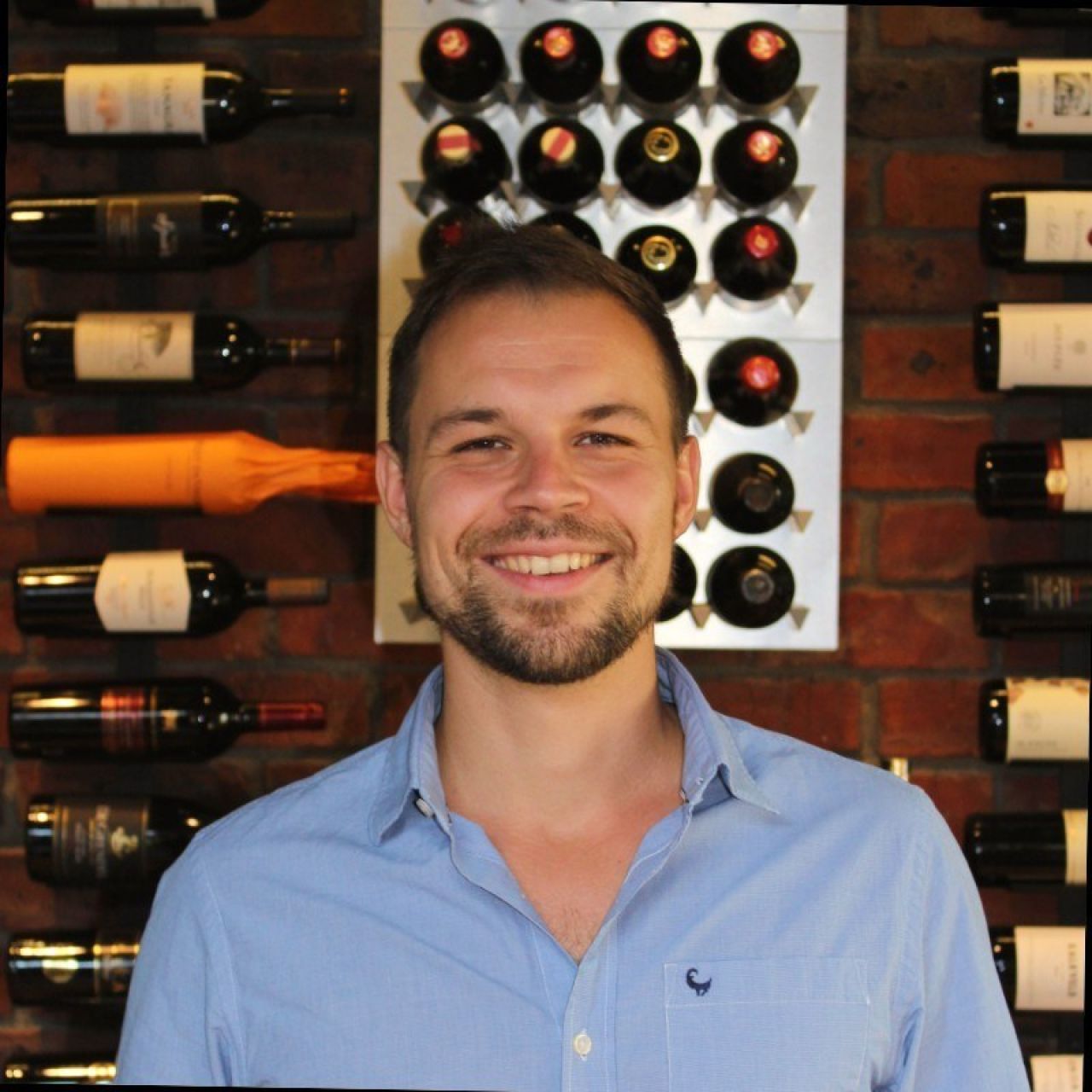
Originally from Croatia, Matija Lesković (PhD) is an Oenologist who completed his doctorate at Stellenbosch University in 2024 with his thesis, “Varietal thiols and ‘reductive’ compounds in white wine.” He has spent the last two years in the premium Austrian wine industry, most recently as a key member of the winemaking team at Weingut Esterházy. With a global career spanning estates in California, Chile, and Croatia, as well as renowned Austrian producers like Emmerich Knoll and Bründlmayer, he specialises in merging international production standards with advanced aroma chemistry.
What prompted you to pursue your PhD in South Africa?
South Africa is one of the global leaders in Sauvignon Blanc and Chenin Blanc research. What specifically brought me to Stellenbosch was the focus on “innovation with purpose” – the practical linking of chemical changes directly to sensory profiles. I noticed that research from Stellenbosch University consistently included sensory analysis, which is critical for making lab data useful in a real cellar.
As an oenologist who has worked in various international cellars, I wanted my research to be actionable, not just academic. I wanted to help an export-driven industry stay competitive.
On a personal note, I’d always heard about the beauty of the country and the friendliness of the people. Coming from Croatia, which is also known for its landscape and hospitality, I found the environment very familiar. The way the local winemakers and researchers welcomed me was incredible.
Briefly explain what the research project entails?
My research was structured into three distinct phases to understand how we can protect the “distinctive character” of South African white wines:
- Chapter 1: The potency of thiols. I quantified how incremental concentration changes in varietal thiols, 3 sulfanylhexan-1-ol (3SH) and 3 sulfanylhexyl acetate (3SHA), drive “tropical” attributes like “passionfruit” and “guava”. A key finding was that 3SHA is significantly more potent, triggering these tropical notes at lower concentrations and increasing them more consistently than 3SH.
- Chapter 2: The limits of copper fining. I evaluated how copper sulfate affects “reductive” wines over time. While copper effectively removes hydrogen sulfide (H2S) (“boiled egg”) off-odour, it is far less effective at eliminating methanethiol (MeSH) (“cabbage/cooked veg”). Importantly, my study showed that while copper significantly lowers 3SH concentrations over a year of bottle storage, the sensory “fruitiness” often persists longer than the chemistry might suggest.
- Chapter 3: The science of wines “opening up.” This work, published in OenoOne this year, investigated how glass swirling affects aroma. We proved that the reduction in and the subsequent “unmasking” of “fruity” notes is primarily due to evaporation, not oxidation. Swirling for 30 seconds effectively restores “tropical” aromas without losing the varietal thiols (3SH/3SHA) themselves.
How does this research address current realities faced by the wine industry?
Since South African producers favour reductive styles to preserve wines’ “fruity and tropical” character, managing H2S and MeSH is a constant hurdle. My research offers a data-driven framework showing that copper isn’t a universal “silver bullet”; it carries a potential risk of stripping varietal thiols during long-term storage. From both a research and winemaking perspective, I strongly advocate for precise bench trials to determine the absolute minimum copper dosage required to clear faults without compromising the wine’s aromatic integrity.
Beyond remediation, I also emphasise preventative measures to avoid problematic H2S levels post-fermentation. This includes precise nitrogen and complex nutrition management to support yeast health during fermentation, as well as rigorous sensory monitoring of the lees during sur lie aging to identify and address reductive markers before they become problematic.
Furthermore, our study provides long-overdue clarity for sommeliers and experts regarding the “opening up” of wine in the glass. We demonstrated that swirling removes H2S primarily through evaporation, not oxidation. By physically volatilising these masking compounds, the wine’s natural “fruitiness” is revealed – effectively demystifying a process that has remained ambiguous in wine literature until now.
Which areas do you think merit further research?
I believe we need to focus more on Aromatic Longevity. We need to identify ways to optimise both fermentation and post-fermentation treatments so that a wine’s “vibrancy” is resilient enough to survive the global supply chain and varying storage conditions.
Additionally, more research is required on methanethiol (MeSH) – specifically regarding preventative measures and more effective removal methods. While H2S is relatively well-understood, MeSH remains a significant challenge for the industry and warrants a more targeted approach.
How did the experience change your personal life and outlook on the industry?
It shifted my perspective from simply following established protocols to becoming a self-reliant oenologist. I learned to find my own answers through critical thinking and experimentation, but also to remain humble enough to recognise that I can’t know everything. I’ve realised it is vital to ask questions and learn from those with more experience.
My PhD taught me patience, and that “mistakes” are often just necessary lessons on the path toward innovation. It reinforced that while science is essential, winemaking requires the practical courage to move from the lab into the cellar and run small-scale trials before committing a full vintage.
On a personal level, the Western Cape has become a second home; I met my fiancée here and continue to visit regularly, and perhaps in the future, the right opportunity will present itself to return and contribute to the industry’s future.
When will you be back in South Africa?
I was in the Cape this past March visiting colleagues during the harvest – the 2026 vintage looks very promising! I have recently concluded my time at Weingut Esterházy, which marks the completion of a very productive two-year period within the Austrian industry. That experience gave me invaluable insight into the precision and technical standards of premium European wine production. I am now looking for the right opportunity to move back to South Africa and join a team where I can fully utilise this expertise.
I believe the industry is at a crossroads where high quality is the minimum requirement for entry. My goal is to help wineries move toward “winemaking by design” – embracing technical precision and distinctive character over vague marketing. I am eager to bridge my expertise between the European and South African industries and would welcome the opportunity to connect with forward-thinking teams regarding roles in strategic winemaking, R&D, or technical consulting.
Matija’s recent research on H2S was published in OenoOne (2026). Following a visit to the Cape for the 2026 harvest, he is now seeking the right professional opportunity to return to the South African industry. Anyone interested in connecting or discussing potential collaborations may contact Matija at [email protected] or via LinkedIn.

More from
Innovation and insights
Hairy roots - a biotechnological tool for grapevine improvement
Hairy roots arise when the phytopathogenic bacterium, Rhizobium rhizogenes inserts DNA into a wounded plant’s genome, triggering the formation of rapidly growing root masses. The rapid growth and relatively fast establishment of hairy roots led to their use in laboratories, where they are used to…
To swirl or not to swirl? - that is the question... (Part 2)
This study investigated the sensory suppression effects of H2S on tropical fruit characters and evaluated whether the perceived improvement following swirling is a result of chemical oxidation or physical volatilisation.

Q&A with Jose Luis Aleixandre-Tudo
Jose Luis Aleixandre-Tudo is an Associate Professor in the Department of Food Technology at the Universitat Politècnica de València, Spain, and an Extraordinary Senior Lecturer in the Department of Viticulture and Oenology at Stellenbosch University, South Africa.