
uniWines Vineyards' quality strategy for higher yielding vineyards
There is a very good strategy in place at uniWines Vineyards whereby each vineyard block is assigned a specific wine goal. The three main wine goals are premium cultivar, cultivar and table wine.
· 6 min read
Introduction
uniWines Vineyards is a cellar located in the Breedekloof region. This cellar has approximately 3 000 hectares of vineyards and is very diverse in terms of the cultivar composition of plantings. There is a very good strategy in place at uniWines Vineyards whereby each vineyard block is assigned a specific wine goal.
The three main wine goals are premium cultivar, cultivar and table wine. In order to qualify for a cultivar wine goal, certain management actions are required in the vineyard and the wine made from the grapes must achieve a certain score in a blind tasting.
The one-wire or so-called high-wire hedge system is widely used. Some of these blocks are mechanically managed and pruned to increase yield. The challenge is to achieve the increased yield without compromising on wine quality, and this has prompted a cellar project in this regard.
Dr Philip Myburgh, previously from the ARC in Stellenbosch, was approached and is still involved in this project that has been launched. This article aims to describe the project and its preliminary results, and to elaborate on the use of the pressure bomb.
Nicholas Bruyns is the viticulturist of uniWines Vineyards and manages the project together with Pierre Snyman in his involvement as Vinpro consultant.
Methodology
Seven blocks were identified that could be described as high yielding (for the purposes > 20 t/ha). These seven blocks consist of one-wire hedge systems, which are mechanically managed.
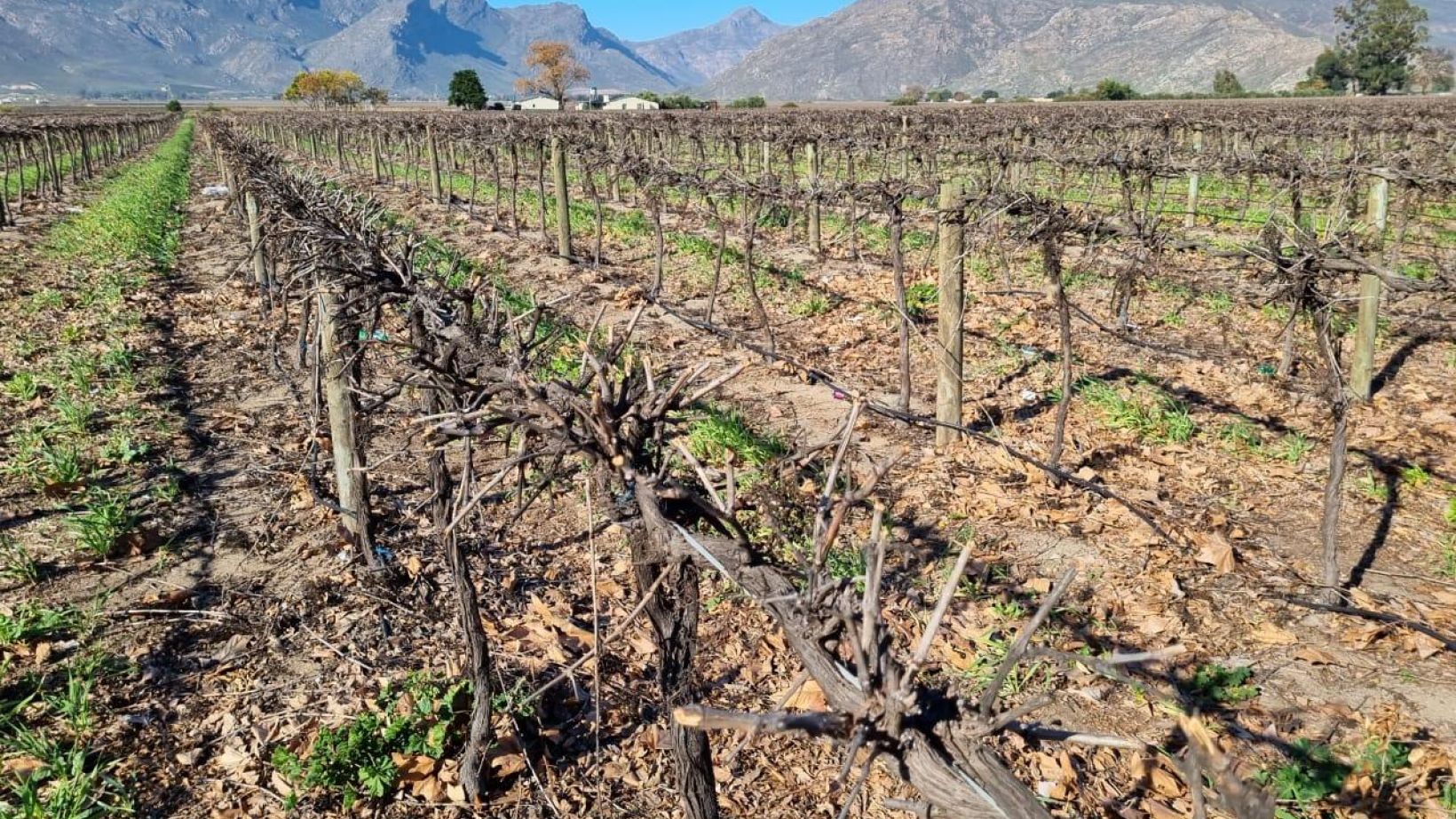
The cultivars include Pinotage, Cabernet Sauvignon, Merlot, Shiraz, Chenin blanc (photo 1), Chardonnay and Sauvignon blanc. A meeting was held with the producers involved and the project was presented to them.
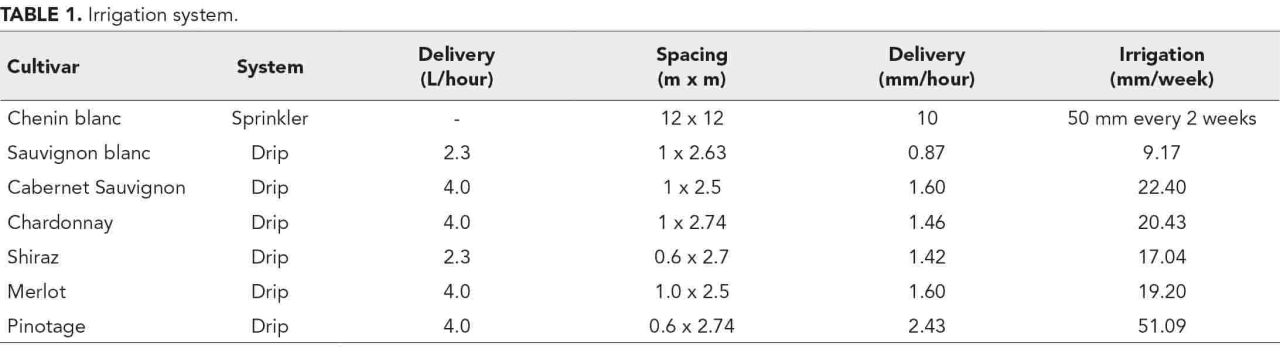
The focus areas were fertilisation, pruning and irrigation, and it was decided to initially only implement the irrigation component of the proposed project. All the relevant data from these blocks were collected and processed (table 1). From this it clearly emerged that all the blocks were managed differently in terms of irrigation.
The plan of action was to establish soil water measurement (capacitance measurement) in these blocks and to monitor the plant water status with the help of a pressure bomb. It is then continuously monitored and compared with the vineyard’s physical condition during regular visits to the sites.
The irrigation (or non-irrigation) of these blocks then takes place according to the recommendation of the viticulturists. Dr Myburgh also suggested that flow meters be installed so water applications can be accurately calculated.
uniWines Vineyards acquired a pressure bomb device and appointed a person to record the readings of these blocks.
Challenges experienced
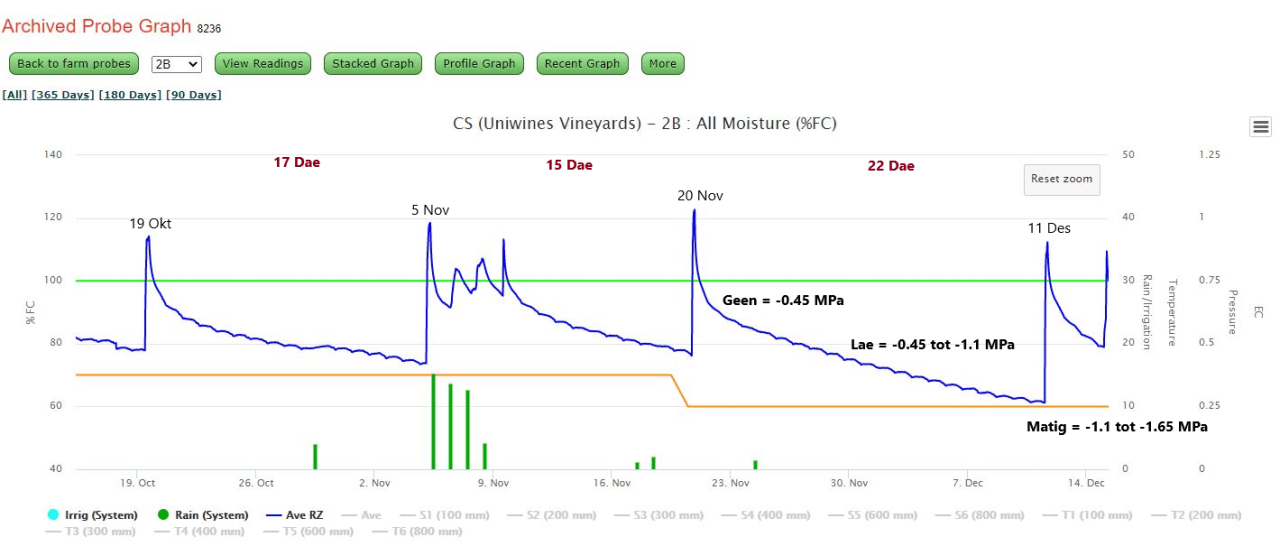
It proved a problem to get the soil water measurement in place using the capacitance meters. The installation was late, only to discover that the meters may have been installed at ineffective drippers. Figure 1 does however show how the water scheduling of the Shiraz was performed over the past season. The pressure bomb worked well, but it broke just before Christmas.
Fortunately ample useful information had been collected by that point, which resulted in good irrigation decisions in the critical phases like berry development for example. The producers were then advised to follow their normal irrigation practices from Christmas until the harvesting of the blocks. The disease pressure was high throughout the season, which could yet have a negative effect on the wine quality of all grapes.
The use of a pressure bomb
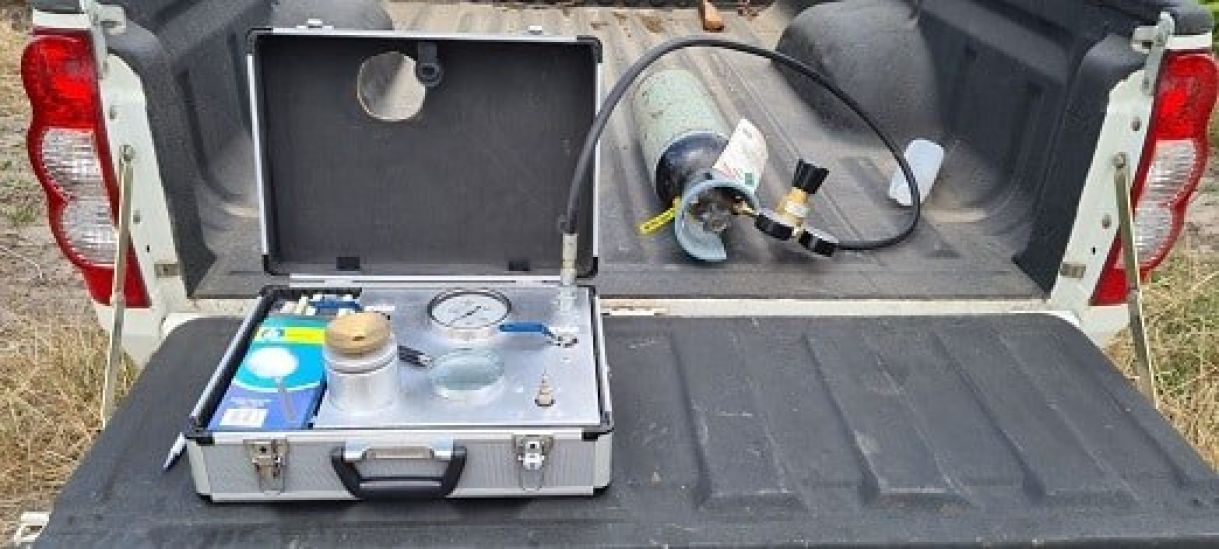
The plant water status of the vine is determined through the use of a pressure bomb (photo 2). The plant water status is not used to determine the size of an irrigation, but is useful to determine the replenishment lines in conjunction with soil water measurement.
There is a protocol for using the pressure bomb and it entails inter alia the following:
- For mid-day plant water measurements, the reading should be recorded between 12:00 and 14:00.
- Pick/use undamaged mature leaves growing on the primary shoots.
- The leaves must be located in the bunch zone and receive good sunlight exposure.
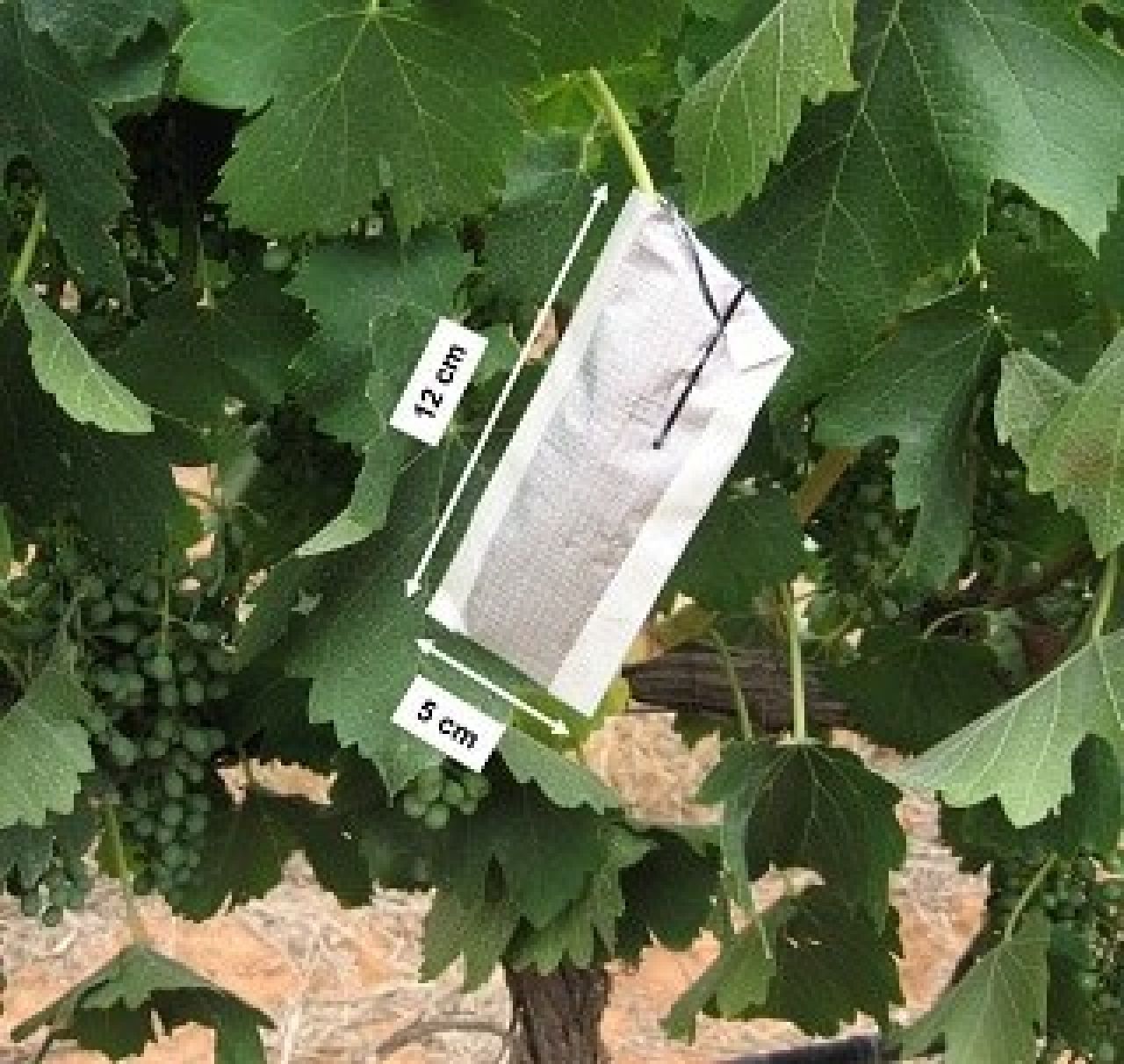
- Choose a leaf and cover it with a tin foil bag (photo 3).
- The leaf can be folded to fit into the bag.
- Place a paper clip over the bag to keep it in position.
- The bagging must occur one to six hours before the measurement takes place.
- Calibrate the pressure bomb before use.
- Cut the leaf with a surgical knife/blade at an angle of 90°.
- Place the leaf inside the pressure bomb immediately/as soon as possible.
- Use a magnifying glass to see the first signs of sap and record the pressure bomb reading (photo 4).
The strategy of uniWines Vineyards
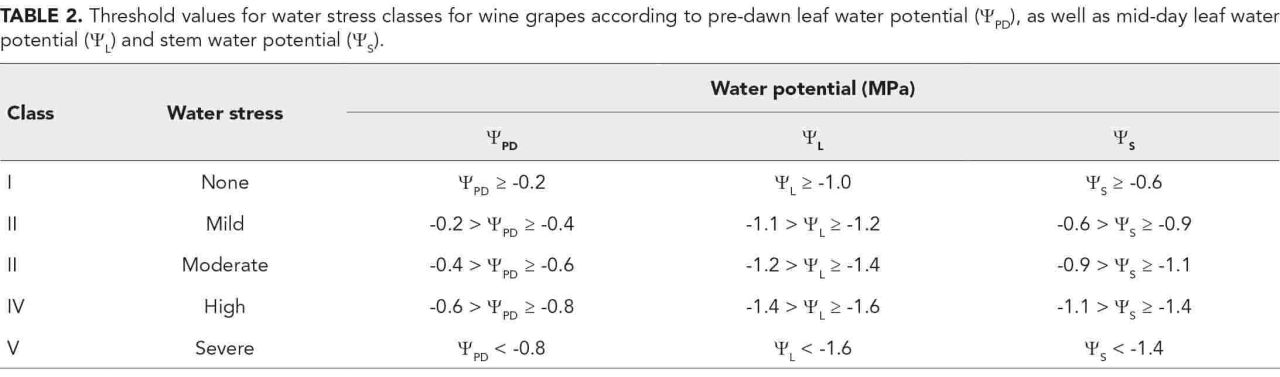
The plant water status can be divided into levels (table 2). Based on this data, uniWines Vineyards decided to follow a moderate water stress approach. This therefore means that the replenishment lines would be determined on a plant water status of -1.2 to -1.4 MPa.
The consensus was that this would be a safe starting point for all the relevant cultivars and that adjustments could be made over time.
Preliminary observations and findings
- The 2020/21 season was late and challenging with record yields for both the Worcester and Breedekloof regions. The average yield of the seven blocks was almost identical to that of the 2019/20 season. With the exception of one block, the yield was at least 25 t/ha.
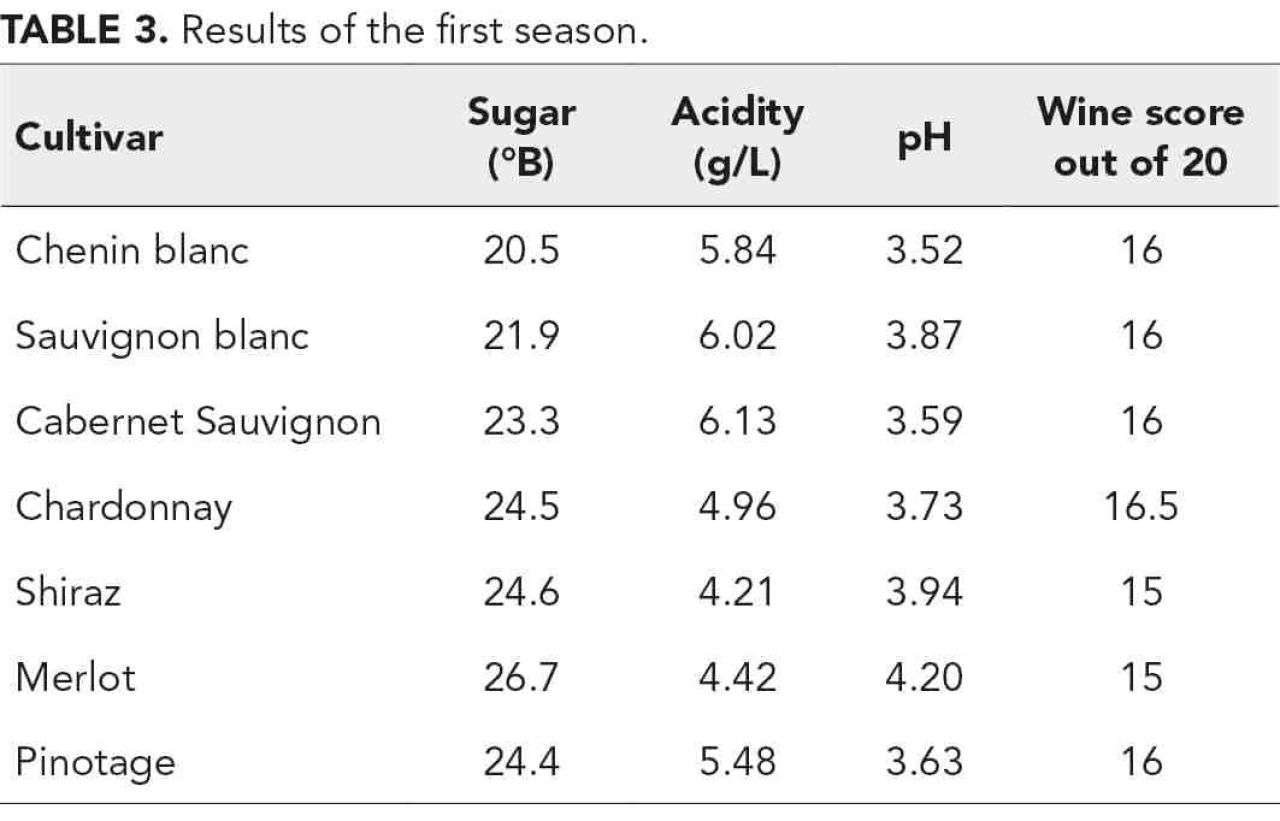
- uniWines Vineyards has a panel of eight winemakers who taste the wines blind and evaluate the quality. The goal is to identify wines that score 16 or higher out of 20 (16 is the minimum score to be classed as a cultivar wine).
- In table 3 the analyses of all seven blocks are given, along with their scores as evaluated by the panel.
- Only two wines did not score the requisite 16 points, but these wines were still undergoing malolactic fermentation and will be judged again at a later stage.
- The marketers, winemakers and producers are very positive and excited about the preliminary results. The results correlate with the research that too much water (in other words no water stress) is negative for wine quality.
Vision for the future
uniWines Vineyards has taken an enormous step to reconcile production with quality. This is only the findings of one year. The ultimate expectation of the project is that guidelines around irrigation and also fertilisation for each cultivar, connected to a wine goal, will simplify the producer’s management.
The irrigation guidelines will be determined specifically according to the cultivar, soil type and irrigation schedule in particular.
This will enable the producers of uniWines Vineyards with high-yielding blocks to produce wines of higher quality (in this case cultivar wine goal). In a subsequent phase, the project will focus on also addressing fertilisation in order to refine the guidelines for sustainable wine quality.
Reference
Myburgh, P.A., 2018. Handbook for irrigation of wine grapes in South Africa.
– For more information, contact Pierre Snyman at [email protected].
Click here to get your copy of WineLand Magazine and here to subscribe to our newsletter.
uniWines uniWines uniWines uniWines

More from
Vineyard, cellar and production
How to understand regenerative farming
Regenerative farming is becoming part of the language of modern viticulture, but what does it actually look like in a vineyard?
JC Smith praat oor wynmaak in die Oos-Vrystaat
JC Smith is ’n derdegeslag-wynmaker. Sy oupa Dassie en pa Flip was albei wynmakers, en hy het tussen wingerde en wynkelders grootgeword. Hy is tans die wynmaker by Blydschap in die Oos-Vrystaat.
Cellar hygiene
Maintaining a spotless wine cellar requires a comprehensive management plan, which includes structural design, equipment sanitation, environmental controls and routine microbial monitoring.