
Training!!!
· 7 min read

Providing regular and effective training is one of the biggest investments any wine cellar can make in their staff. The benefits are on two levels – for the staff themselves, as well as for the company. Good training enhances individual performance, skills and confidence, which leads to higher productivity, better problem-solving and increased job satisfaction. For organisations and companies, it improves efficiency, reduces mistakes, promotes innovation, boosts employee retention and strengthens overall company culture. Profitability also improves as staff members reach their goals faster.
“Train people well enough so they can leave. Treat them well enough so they don’t want to.” – Sir Richard Branson
In this article, we are going to delve deeper into the subject and focus on the first part of the above quote from Sir Richard Branson. In the follow-up article, the second half of the quote will be examined.
Training consists of four main steps, namely:
- Determining needs.
- Designing the programme.
- Implementing the training.
- Evaluation and improvement.
1. Determining needs
This step entails making a clear list of all the staff and all the processes involved in the cellar. Depending on the size and complexity of the business, it may be necessary to assess the different departments separately. The team must thoroughly evaluate all processes, tasks and equipment, as well as each staff member, and draw up a matrix to cover all aspects and options. There are topics on which each member of the team should be trained, for example, health and safety, quality and hygiene, as well as the company’s code of conduct. Then there are trainings that are only required for certain staff members, like forklift training, crossflow filter operator, press operator, etc. The list must clearly indicate the specific training required by each staff member.
The matrix can further indicate who has already received training, as well as those who still have to receive training in the future. Use a system like different colours to distinguish between categories, for example:
- If the person does not require the skill/training, leave the column empty.
- If the person requires the training, mark it yellow.
- While they are busy with the training, mark it orange.
- Once they are declared competent, it can be marked green.
Training is time-consuming and often very expensive, especially if external providers are used. Make sure that the overhead planning is done rigorously.
2. Designing the programme
This step can be divided into three subdivisions:
- Creating the training material and determining all the resources required. List all material and resources that will be required during the training. This is literally the written work instructions and standard operating procedures, which explain exactly how certain cellar tasks must be performed. It also entails any print-outs, presentations, audiovisual material and any other means that may be helpful in the process. Even the attendance lists and any other documentation to be used after the training should be included here.
- Outlining a comprehensive training schedule. This should set out the dates and duration needed to perform the training. It is also important to book the necessary suitable facilities for the training in advance. This will prevent different groups or teams from vying for the same venue space.
- Trainer/training facilitator: Determine who the best person is to present the specific training. Possibly, external providers will have to be used. It is important to contact external providers as early as possible, because this will likely increase the chance that they will be available on your preferred dates for training. Even internal staff should know exactly when they are needed for training and good planning will avoid a last-minute rush to make arrangements.
3. Implementing the training
- If there are critical tasks that cannot be paused during training, a competent stand-in person should be identified to help out for the duration of the training.
- Make sure that all staff are reminded in advance where and when the training will take place.
- If training takes place on other premises, make timely arrangements to transport staff there and back (for example, SKOP courses presented at Elsenburg).
- Start the training with a clear message stating the desired outcome, for example: after this training, you will know exactly how to prepare yeast during the harvest season.
- Make the training exciting, with real examples from the practical work environment, and keep it as short and impactful as possible.
- If training takes place over an entire day, make sure that food and refreshments are arranged.
- There is room for classroom-style training, but do not underestimate the value of practical training in the workplace.
- Encourage participation from the team and urge them to ask questions to clear up any uncertainty before they leave. Strike the iron while it is hot.
- Remember that not all learners learn at the same speed. Make provision for both the group that grasps new concepts quickly, and could therefore perhaps start finding the training monotonous, as well as the group that needs more time to master concepts.
4. Evaluation and improvement
After training is done, it is very important to determine whether it was effective. This can be done in various ways, for example:
- Learners can be asked to perform a written test after undergoing the training.
- They can give oral feedback on the content of the training.
- They can be asked to perform a practical test of the processes involved.
- Over the longer term, various parameters can be identified to judge if training was indeed successful. Examples could include fewer mistakes being made during the processes covered in training, improved work speed, improved quality of work and lower production cost.
To analyse the pre-training and post-training data requires planning and inputs, but the impact thereof on the business cannot be underestimated.
- Some types of training can be captured by merely having participants complete an attendance list. It is important for awareness sessions. Naturally, there is also more formal training, where it is critically important that assessment follows the training. Here, there are two possible outcomes, namely:
a) The person passes the test and is formally declared “qualified”, or;
b) The assessment shows that the person is not yet competent to perform the process adequately. In this case, retraining can be focused on addressing the gaps identified during the assessment. Follow up with a second round of assessment. There is a good chance that the trainee will now be declared qualified.
- A certificate of completion is usually issued for participants who pass the training.
- Let senior management hand out the certificates at an occasion where the whole team is present and use it as an opportunity to build confidence within the team.
- Make sure that all records of all training are captured in writing and that the records are stored safely. The records can also easily be scanned and stored electronically.
- Training records are regularly requested during external audits (for example, WIETA, IPW, BRC and FSSC), so make sure that the designated persons know where to find the records at all times.
Summary
The end goal of training is not only to ensure that specific tasks are performed with 100% accuracy. It should not only focus on the here and now. If training is done correctly and followed up by a thorough assessment, it can be used as a tool to identify staff members with high potential. Ultimately training creates a transparent career path and an internal talent pipeline, which ensures that the organisation can fill key positions from within. This, in turn, promotes morale and employee retention (more about this in the next article).
For more information, contact Pieter Badenhorst at [email protected].
Click here to get your copy of WineLand Magazine.

More from
Vineyard, cellar and production
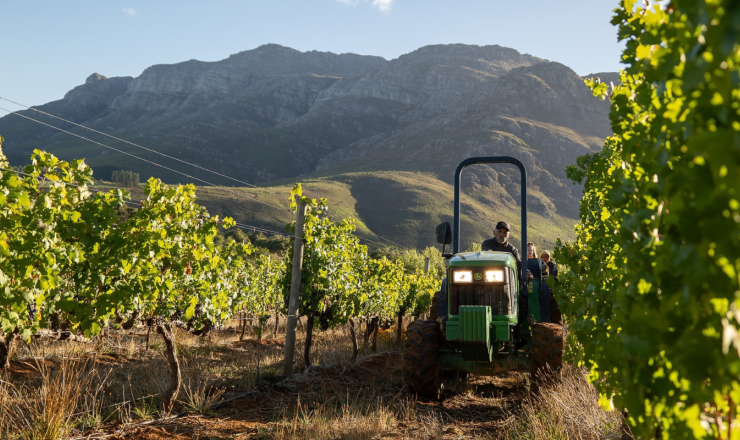
How to understand regenerative farming
Regenerative farming is becoming part of the language of modern viticulture, but what does it actually look like in a vineyard?
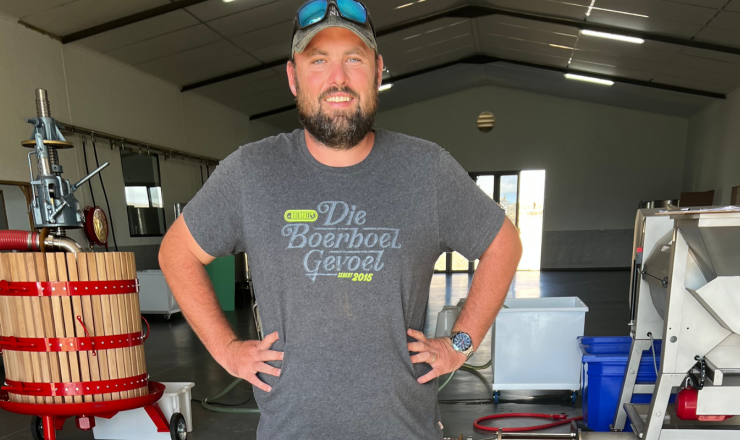
JC Smith praat oor wynmaak in die Oos-Vrystaat
JC Smith is ’n derdegeslag-wynmaker. Sy oupa Dassie en pa Flip was albei wynmakers, en hy het tussen wingerde en wynkelders grootgeword. Hy is tans die wynmaker by Blydschap in die Oos-Vrystaat.

Cellar hygiene
Maintaining a spotless wine cellar requires a comprehensive management plan, which includes structural design, equipment sanitation, environmental controls and routine microbial monitoring.